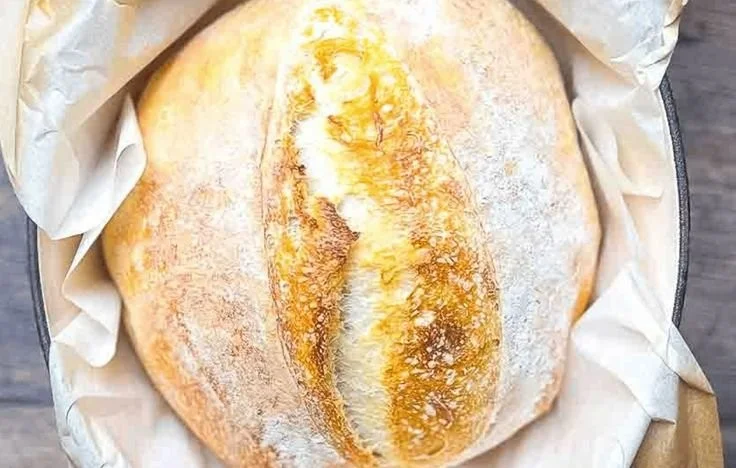
No-Fail Sourdough Bread
There’s something almost magical about the first slice of homemade sourdough—steam curling up from the crumb, a crackling crust that sings as you break it, and a tangy, gently sweet aroma that fills the kitchen. The inside is tender with an open, slightly chewy crumb; the taste carries a deep, fermented complexity that’s both rustic and comforting. This loaf feels like a warm hug: perfect for slow weekend breakfasts smeared with butter, for turning into toasted sandwiches at lunch, or for anchoring a simple dinner with olive oil and herbs.
If you’re curious about other loaves to bake alongside this classic, try pairing your baking rhythm with a spiced loaf such as an apple-cinnamon version to keep that cozy vibe year-round — here’s a recipe that will inspire you: apple-cinnamon loaf.
At a Glance
- Prep Time: 15 minutes active + 30 minutes initial rest + 2–3 hours for stretch-and-folds
- Cook Time: 45–50 minutes
- Total Time: ~4–24 hours (room temp bulk + proof) depending on fridge proofing
- Servings: 12 slices (one medium loaf)
- Difficulty Level: Beginner-friendly (requires time and attention, but simple technique)
Nutrition Highlights
Estimated nutrition per serving (1 slice; recipe yields 12 slices). Values are estimates calculated from ingredient profiles in USDA FoodData Central and rounded for clarity. Actual values vary with flour type, hydration, and exact starter composition.
- Calories: ~170 kcal
- Protein: ~4.7 g
- Carbohydrates: ~35 g
- Dietary fiber: ~1.2 g
- Sugars: <1 g (naturally occurring from flour/starter)
- Fat: ~0.5 g
- Sodium: ~320 mg
Notes: These values are based primarily on common all-purpose/bread flour and a starter composed of equal parts flour and water (by weight). For health guidance on sodium and balanced diets, consult sources such as Mayo Clinic or government dietary guidelines. (Nutrition estimates use USDA FoodData Central as the reference dataset.)
Perfect For…
This no-fail sourdough is ideal when you want rustic flavor with minimal fuss.
- Cozy mornings: Thick toast with jam, or a soft-boiled egg and a slice of warm bread.
- Gatherings: A crowd-pleasing centerpiece—slice it for cheese boards or simple bruschetta.
- Meal prep: Sturdy enough for sandwiches and makes great croutons or breadcrumbs for later.
- Seasonal baking: The tang and crust evoke autumn and winter baking traditions, but it’s just as welcome any crisp morning.
How to Make No-Fail Sourdough Bread
Ingredients (yields 1 medium loaf; about 12 slices)
- 500 g bread or all-purpose flour (about 4 cups)
- 350 g water (70% hydration — about 1 1/2 cups)
- 100 g active sourdough starter (fed and bubbly)
- 10 g fine sea salt (about 1 3/4 teaspoons)
Optional ingredients / substitutions
- For whole-grain: replace up to 150 g flour with whole wheat (adds flavor and chew).
- Seeds: add 40–60 g mixed seeds (sunflower, flax, sesame) for texture.
- Olive oil/butter: add 15–20 g for a softer crumb (not traditional).
- Gluten-free: sourdough gluten-free loaves require specific flours and binders—this recipe is for wheat-based starters.
Step-by-step directions
- In a large bowl, mix the flour and water until a shaggy dough forms.
- Add the sourdough starter and salt, then mix until fully combined.
- Cover the bowl and let it rest for about 30 minutes.
- After resting, perform stretch and folds every 30 minutes for 2-3 hours.
- Shape the dough into a ball and place it in a floured proofing basket.
- Cover and let it rise for 1-2 hours at room temperature, or overnight in the fridge.
- Preheat your oven to 450°F (230°C) with a Dutch oven inside.
- Once preheated, carefully place the dough in the Dutch oven, cover, and bake for 30 minutes.
- Remove the lid and bake for an additional 15-20 minutes until golden brown.
- Let the bread cool completely before slicing. Enjoy!
Practical tips while you follow the steps
- Hydration: 70% hydration (350 g water to 500 g flour) gives a reliably open crumb without being overly sticky for beginners. Adjust by 10 g increments if your flour is particularly absorbent.
- Mixing: Avoid overmixing. Combine until ingredients are homogenous; the stretch-and-folds will build structure.
- Stretch-and-fold technique: Wet your hands slightly, lift one side of the dough and fold it over the center, rotate the bowl and repeat until you’ve folded all sides. This develops gluten gently.
- Proofing control: If your starter is extra active or your kitchen is warm, bulk time will be shorter—watch the dough, not the clock. When it looks slightly puffed and holds a finger indentation slowly, it’s ready.
- Scoring: Use a sharp blade or lame to score immediately before baking to control expansion and create an artisan look.
- Doneness check: Tap the bottom of the loaf—it should sound hollow. Internal temp should be ~205–210°F (96–99°C).
Best Pairings
- Simple: Good-quality salted butter and a pinch of flaky sea salt.
- Breakfast: Soft-boiled eggs, avocado, or ricotta with honey and lemon zest.
- Savory: Olive oil with crushed garlic and herbs, or serve with soups and stews.
- Cheese board: Aged cheddar, tangy goat cheese, or blue cheese pair wonderfully with sourdough’s acidity.
- Beverage: A robust coffee, light-bodied red wine, or herbal tea.
Keeping it Fresh
- Room temperature: Keep tightly wrapped in a linen-lined bread box or paper bag inside a sealed plastic bag for 2–3 days. Avoid refrigerating immediately as the fridge accelerates staling.
- Refrigeration: If you must, store wrapped in the fridge for up to 5 days—expect some loss in crispness.
- Freezer: Slice and freeze double-wrapped for up to 3 months. Toast directly from frozen for best texture.
Pro Tips & Tricks
- Starter strength: Use a lively starter fed 4–8 hours before mixing (bubbly, domed) for predictable rise.
- Flour selection: Bread flour (higher protein) improves rise and chew, while all-purpose will still produce great results. For more flavor complexity, substitute 10–30% of flour with whole wheat or spelt.
- Steam for crust: If you don’t have a Dutch oven, bake with steam in the first 10–15 minutes by placing a tray of hot water on the bottom rack or spritzing the oven with water quickly after placing the loaf inside.
- Temperature checks: If unsure about doneness, use a probe thermometer. 205–210°F internal is ideal.
- Re-proofing after refrigeration: Cold-proofed dough often benefits from a short warm-up at room temperature (30–60 minutes) before baking so the oven spring is stronger.
Creative Twists
- Seeded Rustic Sourdough: Mix 40–60 g of toasted seeds (sunflower, pumpkin, flax) into the dough during initial mixing for nutty flavor and crunch.
- Olive, Rosemary & Sea Salt: Fold in 60–80 g chopped cured olives and 1–2 tablespoons chopped fresh rosemary after the first stretch-and-fold. Sprinkle flaky sea salt before baking.
- Whole Wheat Starter Boost: Swap 150 g of white flour for whole wheat to deepen flavor and add nutrition—expect a denser crumb and shorter oven spring.
- Sweet Variation: Add 60–80 g dried fruit (raisins or chopped dried apricots) and 1 teaspoon cinnamon in a portion of the dough for a breakfast loaf. For more inspiration, see this complementary apple cinnamon recipe that pairs well with sourdough breakfasts.
All Your Questions Answered
Q: My loaf didn’t rise well—what went wrong?
A: Most likely the starter wasn’t active enough or bulk fermentation was too short. Make sure your starter is bubbly and has doubled after feeding before using.
Q: Why is my crumb dense?
A: Under-hydration, under-fermentation, or insufficient stretch-and-folds can cause density. Ensure proper hydration (70% is a good starting point), and let it ferment until it shows good bubbles.
Q: Can I use whole wheat flour only?
A: 100% whole wheat will yield a denser loaf and requires different handling (more hydration and longer fermentation). Try up to 30% whole wheat first, then increase as you learn your flour.
Q: How do I revive stale slices?
A: Sprinkle with water and reheat in a 350°F (175°C) oven for 5–10 minutes, or toast slices until crisp.
Q: Is sourdough healthier than commercial bread?
A: Sourdough fermentation can increase mineral availability and reduce phytic acid, and may be easier to digest for some. Nutritionally, it’s similar in calories to other breads—portion control matters. For specific health guidance, consult resources like Mayo Clinic or government dietary recommendations.
Conclusion
Baking this no-fail sourdough is less about perfection and more about the ritual: feeding the starter, feeling the dough change in your hands, and sharing the first warm slice with someone you love. It rewards patience and becomes better each bake as you learn your starter and your oven.
If you want step-by-step visual guidance or alternative shaping techniques, Alexandra’s clear walkthrough is a fantastic companion for bakers of all levels: Alexandra’s step-by-step sourdough guide. For another approachable beginner’s perspective that covers troubleshooting and starter care, check out this helpful primer: The Clever Carrot beginner’s sourdough guide.
I’d love to hear how your loaf turns out—share photos or questions in the comments and join our baking community. Happy baking!