Dish Snapshot
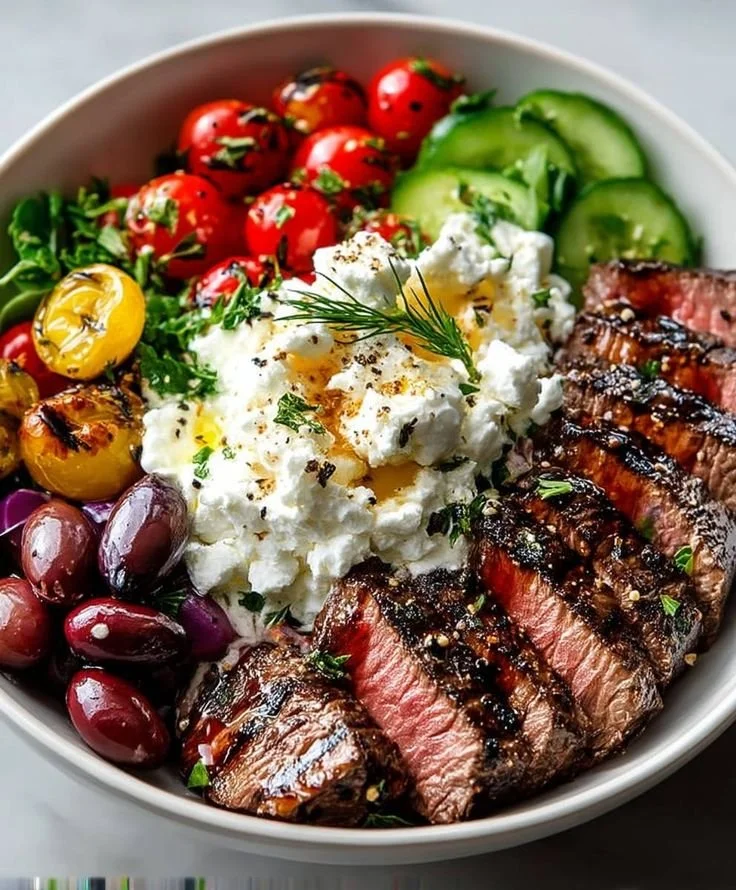
There’s something instantly transporting about a bowl that balances sizzling steak, bright citrus, and cooling yogurt — the aroma of seared beef and roasted vegetables draws you in, the first forkful offers a satisfying chew from tender sirloin, warm nutty quinoa, crisp-roasted peppers and zucchini, and a cool, garlicky tzatziki that ties every bite together. Textures play off one another: juicy slices of steak, fluffy quinoa, and creamy sauce, while fresh herbs and lemon lift the whole dish.
This Mediterranean Steak Bowls recipe is a weeknight workhorse and a weekend crowd-pleaser: fast enough for a busy evening, impressive enough for a casual dinner with friends, and comforting enough for a solo bowl when you want something wholesome and restorative. If you love quick steak preparations, you might also enjoy my take on 15-minute garlic butter steak bites for similar savory satisfaction.
Dish at a glance:
- Serves 4 (adaptable)
- Ready in about an hour with most hands-on time in prep and resting the steak
Nutrition Highlights
Estimated nutrition per serving (recipe yields 4 servings). These are approximate values calculated from USDA FoodData Central ingredient databases and rounded for clarity. For personalized dietary guidance, consult resources like the Mayo Clinic or your registered dietitian.
- Calories: ~520 kcal
- Protein: ~40 g
- Carbohydrates: ~35 g
- Fat: ~24 g
- Dietary Fiber: ~4.5 g
- Sodium: variable (depends on added salt; estimate ~350–500 mg)
Notes:
- Protein is concentrated thanks to the sirloin and Greek yogurt; this makes the bowl particularly satisfying and helpful for muscle-repair and satiety.
- Carbohydrates come mainly from quinoa and vegetables and provide sustained energy.
- Fat is primarily from the steak and olive oil; using leaner steak cuts or reducing olive oil lowers total fat.
- These are estimates; changes to portion sizes, the cut of beef, or yogurt fat percentage will shift values.
Why You’ll Love It
This recipe is the intersection of speed, comfort, and bright Mediterranean flavors. The reasons to make it:
- Flavor payoff: seared steak with roasted vegetables gives a caramelized, savory depth while tzatziki brings cooling tang.
- Practicality: one-bowl meal — protein, grain, veg, and sauce — great for batch cooking.
- Social: bowls are customizable, making them perfect for gatherings where everyone can add their preferred toppings.
- Seasonal: swap vegetables to suit summer peppers and zucchini or autumn root vegetables and keep the same structure.
How to Make Mediterranean Steak Bowls
Ingredients
- 1 lb (450 g) sirloin steak
- 2 cups mixed vegetables (bell peppers, zucchini, red onion), roughly chopped
- 1 cup quinoa (dry)
- 1 cup water or low-sodium broth (for quinoa)
- 1 cup plain Greek yogurt (use low-fat or full-fat based on preference)
- 1 cucumber, grated and drained
- 2 cloves garlic, minced
- 1 tablespoon extra-virgin olive oil
- 1 tablespoon lemon juice
- Salt and freshly ground black pepper, to taste
- Fresh herbs (parsley, dill), chopped, for garnish
Optional ingredients and substitutions
- Swap sirloin for flank steak, skirt steak, or boneless chicken thighs (adjust cooking times).
- Use brown rice or farro instead of quinoa for a chewier grain.
- Make tzatziki dairy-free with unsweetened coconut or soy yogurt and a tablespoon of olive oil.
- Add crumbled feta, kalamata olives, or a dollop of hummus as toppings.
Step-by-step instructions
- Preheat the oven to 400°F (200°C).
- Toss mixed vegetables with olive oil, salt, and pepper; spread on a baking sheet and roast for 20–25 minutes, stirring once halfway, until edges are caramelized and fork-tender.
- Rinse the quinoa under cold water. Combine quinoa and 1 cup water or broth in a saucepan; bring to a boil, reduce to a simmer, cover, and cook 15 minutes or until liquid is absorbed. Remove from heat and let sit covered for 5 minutes, then fluff with a fork.
- Meanwhile, season the sirloin steak generously with salt and pepper. Preheat a grill or heavy skillet (cast iron preferred) over medium-high heat. Sear steak 3–5 minutes per side (depending on thickness) for medium-rare to medium. Use an instant-read thermometer for best accuracy: 130–135°F for medium-rare, 140°F for medium. Let the steak rest 5–10 minutes before slicing against the grain.
- For the tzatziki sauce, combine Greek yogurt, grated and drained cucumber, minced garlic, lemon juice, a pinch of salt, and chopped fresh herbs in a bowl. Taste and adjust lemon, salt, or garlic to preference.
- Assemble bowls with a base of quinoa, topped with roasted vegetables and sliced steak. Spoon tzatziki over the top, garnish with extra herbs and a lemon wedge. Serve immediately.
Practical tips
- Let the steak rest after cooking to retain juices; slicing too soon makes it drier.
- Drain grated cucumber well (squeeze in a tea towel) to keep tzatziki from becoming watery.
- Don’t over-fluff quinoa — a gentle fork does the job.
- Use a thermometer to hit your desired doneness; visual cues can be misleading.
Best Pairings
Serve It Up ideas:
- Add a side of warm pita or grilled flatbread and a small bowl of olives for an appetizer-style spread.
- Toss in crumbled feta, a spoonful of hummus, or a drizzle of extra-virgin olive oil to elevate richness.
- For beverages: a crisp Sauvignon Blanc or an herbal iced tea complements the citrus-herb profile.
- Try a Mediterranean potato salad alongside for a heartier plate; for a recipe you can pair with, see this Mediterranean potato salad.
Storage Instructions
Keeping it Fresh:
- Room temperature: Do not leave assembled bowls at room temperature for more than 2 hours (1 hour if ambient temperature is above 90°F / 32°C) due to food safety guidelines.
- Refrigeration: Store components separately in airtight containers. Cooked steak and quinoa: 3–4 days. Tzatziki and roasted vegetables: 3–4 days. Assembled bowls: best consumed within 24–48 hours for texture and freshness.
- Freezer: Quinoa and cooked steak (slice before freezing for easier reheating) can be frozen up to 2–3 months in freezer-safe containers. Tzatziki does not freeze well—yogurt separates when frozen—so make a fresh batch after thawing.
Follow USDA food safety recommendations for cooling and reheating: cool foods quickly, store below 40°F (4°C), and reheat leftovers to 165°F (74°C) before eating.
Insider Secrets
- Best cuts: Choose a well-marbled sirloin or strip steak for flavor; for a leaner option, choose top round but expect firmer texture.
- Doneness cues: Use an instant-read thermometer; press test methods take practice. Medium-rare retains the most juices and pairs nicely with tangy tzatziki.
- Texture balance: Roast vegetables until they have charred edges for contrast with the smooth yogurt and grain.
- Herb timing: Add some chopped herbs into the tzatziki and reserve a handful for finishing to keep the bright green color and aroma.
Delicious Variations
Switch It Up!
- Vegetarian: Replace steak with grilled halloumi or marinated and roasted chickpeas (toss canned chickpeas with smoked paprika, cumin, olive oil, roast 20–25 minutes).
- Low-carb / Keto: Use cauliflower rice instead of quinoa, omit the cucumber in plentiful amounts, and add avocado slices for extra fat and creaminess.
- Spicy harissa kick: Marinate steak in a mixture of harissa paste, olive oil, and lemon for 30 minutes before searing; finish with a drizzle of yogurt mixed with a touch of harissa for heat.
- Mediterranean bowl for meal prep: Double the quinoa and roast extra vegetables; keep protein and sauce separate to maintain texture through the week.
Frequently Asked Questions
Q: Can I use a different grain?
A: Yes — farro, bulgur, or brown rice work well; adjust cooking times per package directions.
Q: How do I prevent watery tzatziki?
A: After grating cucumber, sprinkle with a pinch of salt, let sit 10 minutes, then squeeze out excess moisture with a clean towel or cheesecloth.
Q: Is there a good make-ahead strategy?
A: Cook quinoa and roast vegetables in advance; make tzatziki the same day or the evening before and store in the fridge. Reheat steak briefly or slice and serve cold over warm quinoa for quick lunches.
Q: Can I grill everything outdoors?
A: Absolutely — grill the steak, wrap vegetables in a foil packet to roast on the grill, and warm flatbread alongside for a smoky finish.
Q: How can I make this lower sodium?
A: Use low-sodium broth for the quinoa, limit added salt, and check the sodium content of any packaged additions (like olives or preserved feta).
Conclusion
Mediterranean Steak Bowls are a versatile, flavor-forward meal that balances protein, grains, and bright, herby sauce—perfect for weeknights, entertaining, or meal prep. If you want more bowl inspiration with a Mediterranean spin, try this take on a Mediterranean Steak Bowl from The Real Food Dietitians, or explore another grain-forward version at Mediterranean Steak Grain Bowl | Kara Lydon. I’d love to hear how your bowls turn out — share photos, swaps, and questions in the comments and join our community of home cooks.