

Dish Snapshot
Imagine pulling a braided, simmered loaf of golden vegan “chicken” from a pot of fragrant broth: an umami-rich steam rises, carrying notes of soy and mellow onion; the exterior holds a slight chew while the interior pulls apart into tender, fibrous shreds that soak up sauces like a sponge. Each bite offers a surprising, meat-like texture—springy, chewy, and satisfyingly substantial—yet light on the palate. This two-ingredient wonder (flour and water, thoughtfully seasoned and simmered) is comfort food reimagined for plant-based kitchens.
This recipe is perfect for busy weeknights when you want a hearty, budget-friendly protein; for weekend meal prep that will carry you through salads, sandwiches, and bowls; and for gatherings where you want a crowd-pleasing, cruelty-free centerpiece. It’s also a cozy, hands-on project for a rainy afternoon—knead, rinse, simmer, and savor the little ritual of transforming simple pantry staples into something magical.
Nutritional Breakdown
All nutritional estimations below are approximate and based primarily on the USDA FoodData Central values for all-purpose flour (used here as the base ingredient), with water contributing negligible macronutrients. The calculation assumes 4 cups (approx. 480 g) of all-purpose flour divided into 6 servings; it does not include additional calories or sodium from vegetable broth or soy sauce—those will increase sodium considerably depending on which products you use. For authoritative nutrient values, see USDA FoodData Central and health guidance from organizations such as the Mayo Clinic.
Per serving (approx. 1/6 of final yield):
- Calories: ~290 kcal
- Protein: ~8.3 g
- Carbohydrates: ~61 g
- Fat: ~0.8 g
- Dietary Fiber: ~2.2 g
- Sodium: variable — depends on broth/soy sauce (use low-sodium versions to limit intake)
Notes:
- The washing process removes a portion of the starch, so the final weight is lower than the raw flour start-weight; this estimate takes raw flour composition as the basis for an easy, conservative guide.
- If you want a lower-carb or higher-protein commercial alternative, consider firm seitan made from vital wheat gluten (commercially measured macros differ).
- For sodium guidance, the Mayo Clinic and CDC recommend limiting sodium intake—use low-sodium broth and reduced-sodium soy sauce if you’re monitoring salt.
Why You’ll Love It
- Ease & Satisfaction: With only two core ingredients (flour + water) and a straightforward process, you create a filling, protein-forward base that tastes like effort—but requires surprisingly little shopping.
- Versatility: Shreds like chicken—perfect for everything from sandwiches and tacos to curries, stews, and salads.
- Nostalgia & Comfort: The slow simmer releases savory, homey aromas that evoke kitchen memories—ideal for communal dinners or comforting solo meals.
- Budget-Friendly & Sustainable: Pantry staples transform into a satisfying protein with a low environmental footprint compared to animal-based meats.
- Hands-On Joy: The knead-and-wash process is oddly meditative; it’s a great project to involve kids or to make with friends.
Method & Process
Ingredients
- 4 cups (approx. 480 g) all-purpose flour
- 1 ¾ cups (420 ml) water (for dough)
- 6 cups (1.4 L) vegetable broth (for simmering)
- 2 tbsp soy sauce (add to broth for seasoning)
- 1 tsp garlic powder (optional, add to broth)
- 2 tsp onion powder (optional, add to broth)
Optional ingredients and substitutions
- Low-sodium vegetable broth and reduced-sodium soy sauce (for lower sodium)
- 1–2 tbsp nutritional yeast (add to dough or broth for savory depth)
- 1 tsp smoked paprika or 1–2 tbsp tomato paste (for smoky/Bbq notes in broth)
- Gluten-free alternative: Jackfruit, mushrooms, or shredded tofu (see variations)
- For a more intensely protein-forward base, use vital wheat gluten (not a 2-ingredient method)
Step-by-step Instructions
- Mix flour and water in a large bowl to form a shaggy dough. Start with the 1 ¾ cups of water and add it gradually until the dough comes together; it should be firm and slightly tacky.
- Knead on a clean surface for 8–10 minutes, adding a light dusting of flour only if the dough is excessively sticky. Aim for an elastic, smooth ball.
- Rest the dough in a bowl of water for 1–2 hours. Submerge the dough completely; the resting hydrates and relaxes the gluten.
- After resting, begin the washing process: Place the dough in a large bowl of cold water. Squeeze and rinse the dough underwater repeatedly, discarding the first cloudy water (that’s the released starch). Continue rinsing and squeezing until the water runs much clearer and the dough becomes pale beige and elastic—this can take several rounds (10–20 minutes total).
- Shape the washed dough into a braid or knot; this helps even cooking and creates a meatier texture.
- Bring the vegetable broth to a gentle simmer in a wide pot. Add soy sauce, garlic powder, onion powder, and any optional seasonings. Do not allow the broth to boil vigorously.
- Submerge the shaped dough and simmer gently for 1 hour, flipping the loaf halfway through to ensure even cooking. Maintain a low poach—agitation or rolling boil will make the texture spongy rather than meaty.
- Turn off the heat and allow the dough to cool in the broth to absorb flavor. Cooling in the liquid also firms the texture.
- Once cooled, remove and shred with two forks or your hands to create pulled “chicken.” Adjust texture by shredding finer or leaving larger chunks.
- Store leftovers in the broth for up to 7 days refrigerated, or portion and freeze (see storage section).
Practical tips
- Avoid overzealous squeezing during washing—firm but gentle is best to preserve gluten structure.
- Keep the simmer gentle; too-aggressive boiling creates holes and a less desirable texture.
- If the dough remains starchy/white after many washes, continue—patience creates a chewier, more gluten-rich result.
Best Pairings
- Classic Sandwich: Shredded seitan + vegan mayo, crisp lettuce, pickles on toasted sourdough.
- Hearty Bowl: Grain (rice, quinoa), roasted vegetables, shredded seitan, and a tangy tahini or peanut sauce.
- Comfort Soup: Add chunks to a creamy vegan chicken-style noodle soup for texture and substance.
- BBQ Sliders: Toss shreds in vegan BBQ sauce, serve on slider buns with coleslaw.
- Breakfast Twist: Pan-sear shredded seitan until crispy and serve with avocado toast or as a protein-rich side to scrambled tofu.
- Snack/Appetizer: Lightly coat shreds in seasoned flour and shallow-fry or bake for crunchy bites; serve with a dipping sauce.
- Pair with beverages: Robust, malty beers or an herbal iced tea complement the savory seitan well.
Storage Instructions
- Room temperature: Not recommended—do not leave cooked seitan at room temperature for more than 2 hours (food safety).
- Refrigeration: Store submerged in broth in an airtight container for up to 7 days. The broth preserves moisture and flavor.
- Freezer: Portion into freezer-safe containers or vacuum bags and freeze for up to 3 months. Thaw overnight in the refrigerator before reheating.
- Reheating: Reheat gently in simmering broth or in a covered pan with a splash of water to avoid drying; microwaving works for quick days but may alter texture slightly.
Chef’s Advice
- Dough feel is your guide: after 8–10 minutes of kneading, the dough should feel elastic and spring back when pressed.
- Water temperature matters: cool to lukewarm water for mixing; hot water can damage gluten formation.
- Patience with washing: the first cloudy rinse is starch—don’t stop early; clearer water yields a chewier, more meat-like texture.
- Low and slow simmering: maintain a gentle poach to set the gluten; bubbling will create an aerated, less-dense interior.
- Flavor soak: allowing the loaf to cool in seasoned broth improves depth—don’t skip the chill-in-broth step.
- If you want firmer “chunks,” bake the shredded pieces briefly after simmering to caramelize edges.
Delicious Variations
- Asian-Style Soy-Ginger: Simmer with low-sodium broth, extra soy, grated ginger, a dash of mirin, and finish shreds in a hot skillet with sesame oil and scallions.
- Smoky BBQ Pulled “Chicken”: After shredding, toss with smoky BBQ sauce and bake briefly to set; serve on buns with pickled red onions.
- Lemon-Herb Roast: Add bay leaf, fresh rosemary, and lemon slices to the simmering broth; use shreds in Mediterranean bowls.
- Spicy Buffalo: Toss shredded seitan in a vegan buffalo sauce and serve with cooling cashew ranch and celery sticks.
- Gluten-Free Swap: For a gluten-free “pulled” alternative, use canned young jackfruit (drained and shredded) or shredded, pressed tempeh/tofu—seasoned and cooked similarly for texture and flavor.
Frequently Asked Questions
Q: Can I make this gluten-free?
A: The traditional washed-flour method produces gluten (seitan). For gluten-free eaters, use young jackfruit, firm tofu, or shredded, pressed mushrooms as a pulled “chicken” alternative.
Q: My dough never gets elastic—what went wrong?
A: Under-kneading or using too-cold water can prevent good gluten development. Knead 8–10 minutes until elastic. Overuse of extra flour when kneading can also inhibit elasticity.
Q: How can I reduce sodium?
A: Use low-sodium vegetable broth and reduced-sodium soy sauce; taste and adjust seasoning after simmering.
Q: Can I freeze the unshredded loaf?
A: Yes—wrap tightly and freeze for up to 3 months. Thaw in the fridge before shredding and reheating.
Q: What if the texture is too soft or too wet?
A: Simmer longer at a very gentle heat to firm it up, or quickly pan-sear shredded pieces to dry and crisp edges as desired.
Conclusion
This two-ingredient vegan chicken (washed-flour seitan) is an unexpectedly transformative recipe—simple ingredients, soulful technique, and a million ways to enjoy the final shredded protein. If you’d like a step-by-step visual or want to compare notes on different washing and simmering techniques, check this detailed walkthrough at It Doesn’t Taste Like Chicken, and read a tested experiment documenting the trend at The Kitchn. Try it, tweak it, and share your results—I’d love to hear how you transform pantry staples into something spectacular.
Print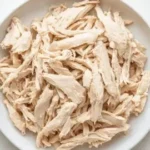
Vegan Chicken (Washed-Flour Seitan)
- Total Time: 105 minutes
- Yield: 6 servings 1x
- Diet: Vegan
Description
A two-ingredient vegan chicken made from flour and water, simmered in broth for a meat-like texture perfect for various dishes.
Ingredients
- 4 cups (approx. 480 g) all-purpose flour
- 1 ¾ cups (420 ml) water
- 6 cups (1.4 L) vegetable broth
- 2 tbsp soy sauce
- 1 tsp garlic powder (optional)
- 2 tsp onion powder (optional)
Instructions
- Mix flour and water in a large bowl to form a shaggy dough. Start with the 1 ¾ cups of water and add it gradually until the dough comes together; it should be firm and slightly tacky.
- Knead on a clean surface for 8–10 minutes, adding a light dusting of flour only if the dough is excessively sticky.
- Rest the dough in a bowl of water for 1–2 hours, submerging completely.
- Begin the washing process: Place the dough in a bowl of cold water. Squeeze and rinse until the water runs clear, which can take 10–20 minutes.
- Shape the washed dough into a braid or knot.
- In a wide pot, bring the vegetable broth to a gentle simmer and add soy sauce and optional seasonings.
- Submerge the dough and simmer gently for 1 hour, flipping halfway through.
- Turn off the heat and let the dough cool in the broth to absorb flavors.
- Shred with forks or hands to create pulled
Notes
For lower sodium, use low-sodium broth and reduced-sodium soy sauce. Allow the dough to cool in seasoned broth for better flavor absorption.
- Prep Time: 15 minutes
- Cook Time: 90 minutes
- Category: Main Course
- Method: Simmering
- Cuisine: Vegan
Nutrition
- Serving Size: 1 serving
- Calories: 290
- Sugar: 0g
- Sodium: variable
- Fat: 0.8g
- Saturated Fat: 0g
- Unsaturated Fat: 0g
- Trans Fat: 0g
- Carbohydrates: 61g
- Fiber: 2.2g
- Protein: 8.3g
- Cholesterol: 0mg


