Spicy Salmon Sushi Bake Recipe
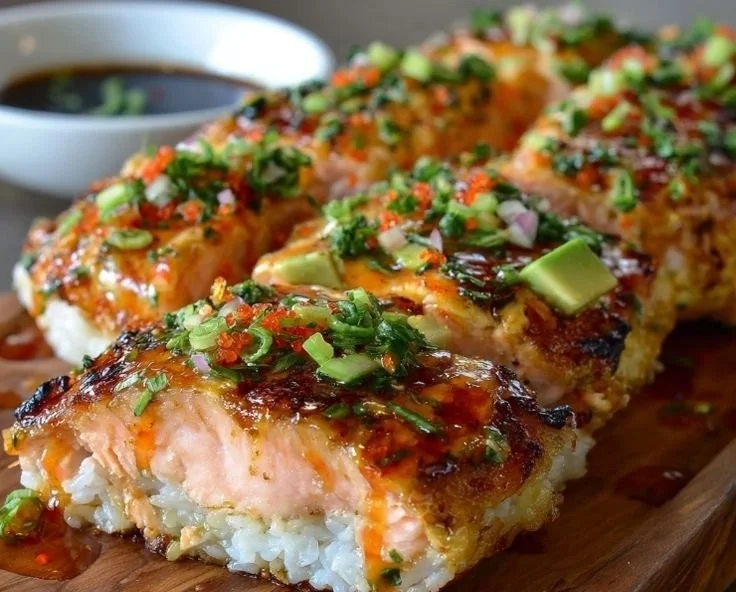
There’s something utterly comforting about the warm, savory aroma of roasted salmon mingling with the sweet tang of seasoned sushi rice. Imagine spooning out a gooey, spicy-sweet layer of salmon and mayo that yields with a gentle press, revealing the pillowy sushi rice beneath — a pleasing contrast of creamy, flaky, and slightly crisp at the edges. This Spicy Salmon Sushi Bake is bright with scallions, sings with sesame oil, and — if you use tobiko — finishes with a lively pop that makes every bite feel celebratory.
This recipe hits a sweet spot: it’s casual enough for weeknight dinners, showy enough for potlucks and gatherings, and quick enough for feeding hungry friends without fuss. Make it when you want sushi flavors without the rolling board, when a comforting family meal is needed, or when you want an easy centerpiece for game day or festive nights. It’s social, shareable, and forgiving — exactly the kind of recipe that sparks smiles and seconds.
Dish Snapshot
- Prep Time: 15 minutes
- Cook Time: 35 minutes (rice + bake)
- Total Time: about 50 minutes
- Servings: 6
- Difficulty Level: Easy
Nutrition Highlights
These values are approximate per serving (recipe yields ~6 servings). Nutrition estimates are based on ingredient profiles from USDA FoodData Central and general guidance from reputable health sources (USDA/CDC, Mayo Clinic). Use these as a ballpark; exact values vary by brands and specific ingredients used.
Approximate nutrition per serving:
- Calories: ~530–540 kcal
- Protein: ~20 g
- Carbohydrates: ~50–55 g
- Fat: ~25–27 g
- Fiber: ~1–2 g
- Sodium: ~190–220 mg
Notes: values rounded. High-calorie contributors are mayonnaise and salmon (healthy fats). Carbs come mainly from sushi rice and sugar used in the vinegar seasoning. For lower calories or fat, reduce mayonnaise or swap for light mayo or Greek yogurt (see variations). For precise tracking, input your exact brands into a nutrition calculator or app. (Sources: USDA FoodData Central; Mayo Clinic recommendations for balanced macronutrients.)
Perfect For…
This dish is perfect when you want the flavors of sushi without the technique. It’s especially great for:
- Casual gatherings and potlucks — serve straight out of the baking dish and let people scoop their portions.
- Busy weeknights — assembly is quick; the oven does the rest.
- Celebrations — add tobiko and extra garnishes for a festive, sushi-restaurant feel.
- Those craving a comforting, umami-forward meal with bright, fresh notes from scallion and nori.
Preparation Guide
Ingredients
- 2 cups sushi rice (uncooked)
- 2.5 cups water
- 1/4 cup rice vinegar
- 2 tablespoons sugar
- 1 teaspoon salt
- 1 lb fresh salmon fillet (skinless and diced)
- 1/2 cup mayonnaise
- 2 tablespoons Sriracha sauce (or to taste)
- 1 teaspoon sesame oil
- 1/2 cup green onions (chopped, plus extra for garnish)
- 1 sheet nori (cut into small strips)
- To taste tobiko (optional for garnish)
Optional ingredients and substitutions:
- Light mayonnaise or plain Greek yogurt to reduce calories/fat
- Gochujang or chili paste instead of Sriracha for a deeper heat
- Smoked salmon instead of fresh for a no-bake option (see variations)
- Lime zest or a splash of lime juice for brightness
- Add avocado slices when serving for extra creaminess
Step-by-step Instructions
- Preheat your oven to 375°F (190°C).
- Rinse the sushi rice under cold water until the rinse runs clear to remove excess starch.
- Combine rinsed rice and 2.5 cups water in a rice cooker or heavy pot. Cook according to your rice cooker’s instructions or bring to a simmer covered, reduce heat, and cook 15–18 minutes until water is absorbed and rice is tender. Let rest 10 minutes off heat.
- In a small bowl, combine 1/4 cup rice vinegar, 2 tablespoons sugar, and 1 teaspoon salt. Stir until dissolved.
- Transfer cooked rice to a wide bowl, fluff with a fork, then gently fold in the vinegar mixture. Spread the seasoned rice evenly in the bottom of a 9×13-inch baking dish (or similar). Let the rice cool slightly (5–10 minutes).
- In a mixing bowl, combine the diced salmon, 1/2 cup mayonnaise, 2 tablespoons Sriracha, 1 teaspoon sesame oil, and 1/2 cup chopped green onions. Mix gently until well combined. Taste and adjust spiciness or mayo to preference.
- Spread the salmon mixture evenly over the cooled rice in the baking dish, smoothing the top for an even layer.
- Bake in the preheated oven for about 25–30 minutes, or until the salmon is cooked through and the top is slightly golden. If you like a browned top, broil for 1–2 minutes at the end — watch closely to avoid burning.
- Remove from oven and let rest 3–5 minutes. Garnish with extra green onions, nori strips, and tobiko if using.
- Serve warm, scooping out portions with a large spoon. Enjoy!
Practical tips:
- Don’t overmix the salmon; keep a gentle fold so the texture remains appealing.
- If using a convection oven, reduce temperature by 25°F and check earlier.
- To check salmon doneness, it should flake easily and reach 145°F internal temp (USDA guidance).
- Let rice cool slightly before adding salmon to avoid thinning the mayo mix.
Best Pairings
- Serve with crisp cucumber salad, pickled ginger, or lightly dressed seaweed salad for contrast.
- Offer small bowls of soy sauce or tamari, wasabi, and extra Sriracha on the side.
- Pair with chilled green tea or a citrusy white wine (Sauvignon Blanc or dry Riesling) to cut richness.
- For a casual option: set out small crisp tortilla chips or rice crackers to scoop, or serve over lettuce leaves for low-carb wraps.
Storage Instructions
Food safety first — this dish contains cooked fish and should be handled carefully.
- Room temperature: Do not leave out more than 2 hours (1 hour if ambient temperature is above 90°F / 32°C).
- Refrigeration: Store in an airtight container in the fridge for up to 3–4 days. Reheat gently in the oven (350°F / 175°C) until warmed through, or microwave in short bursts to avoid rubbery texture.
- Freezer: You can freeze portions for up to 1–2 months for quality. Thaw overnight in the refrigerator and reheat all the way through before serving. Note: texture of the rice and mayo may change slightly after freezing.
Chef’s Advice
- Use the best quality salmon you can find — fresh wild-caught or high-quality farmed fillets both work; because the fish is front-and-center, freshness matters.
- Sushi rice texture is key: rinsing and gentle folding with the vinegar mixture preserves that slightly sticky, separate-grain structure.
- Balance the mayo and heat to taste — start conservative with Sriracha; you can always add more when serving.
- For a glossy top without over-browning, brush a tiny bit of mayo across the surface before broiling.
- If you want a deeper umami boost, fold in a teaspoon of soy sauce or a dash of dashi powder into the salmon mixture.
Creative Twists
- Vegan Sushi Bake: Replace salmon with diced marinated tempeh or roasted shiitake mushrooms. Use vegan mayonnaise and add a teaspoon of toasted sesame for richness. Top with sesame seeds and pickled carrots.
- Low-Fat / High-Protein Option: Swap half the mayonnaise for plain Greek yogurt and reduce mayo by 1/4 cup. Use extra scallions and a squeeze of lemon for brightness.
- Crunchy Korean-style: Add a layer of quick kimchi (drained) between rice and salmon mixture, and switch Sriracha for gochujang + a bit of honey for a sweet-spicy depth.
- No-Bake Smoked Salmon Version: Use smoked salmon ribbons mixed with a light mayo-dill mixture; skip baking and serve chilled over warm rice for a sashimi-inspired twist.
Common Questions & Answers
Q: Can I use frozen salmon?
A: Yes — thaw completely in the refrigerator before dicing and using. Pat dry to remove excess moisture so the mixture isn’t watery.
Q: Is this safe to eat if I prefer my salmon slightly rare?
A: Because this is baked, the salmon should be cooked through for safety. If you prefer less-done fish, use sushi-grade salmon and follow safe-handling practices, but note that USDA recommends cooking fish to 145°F.
Q: How can I make this less spicy?
A: Reduce Sriracha to 1 tablespoon or substitute with a mild chili sauce, or use no heat and add a pinch of smoked paprika for flavor without the burn.
Q: Can I make this ahead?
A: Assemble the rice and salmon mixture separately. Store refrigerated up to 24 hours before baking, then bake just before serving for best texture.
Q: Any tips for preventing soggy rice?
A: Cool rice slightly before assembling and avoid excess wet ingredients on top. If rice seems wet, let it sit uncovered for a few extra minutes to steam off excess moisture.
Conclusion
This Spicy Salmon Sushi Bake is an inviting, shareable, and flexible recipe that brings sushi flavors into an easy, oven-friendly format — perfect for busy nights, friendly gatherings, or any time you want comfort with a kick. Try it once and you’ll likely find yourself adapting it again and again: milder for weeknights, dressed up for parties, or transformed into vegan and low-fat versions to suit your table.
For a helpful alternate method and visual reference, see this detailed guide on how to make salmon sushi bake: How to Make Salmon Sushi Bake – FeedMi Recipes. For another take with creative serving ideas and flavor notes, check out this spicy salmon variation: Spicy Salmon Sushi Bake – The Food Blog.
If you make it, please share your photos and any twists you tried — I love seeing how readers make a recipe their own. Happy baking and happy sharing!
Print
Spicy Salmon Sushi Bake
- Total Time: 50 minutes
- Yield: 6 servings 1x
- Diet: Pescatarian
Description
A comforting Spicy Salmon Sushi Bake featuring roasted salmon, seasoned sushi rice, and a creamy, spicy topping that’s perfect for casual gatherings or weeknight dinners.
Ingredients
- 2 cups sushi rice (uncooked)
- 2.5 cups water
- 1/4 cup rice vinegar
- 2 tablespoons sugar
- 1 teaspoon salt
- 1 lb fresh salmon fillet (skinless and diced)
- 1/2 cup mayonnaise
- 2 tablespoons Sriracha sauce (or to taste)
- 1 teaspoon sesame oil
- 1/2 cup green onions (chopped, plus extra for garnish)
- 1 sheet nori (cut into small strips)
- To taste tobiko (optional for garnish)
Instructions
- Preheat your oven to 375°F (190°C).
- Rinse the sushi rice under cold water until the rinse runs clear to remove excess starch.
- Combine rinsed rice and 2.5 cups water in a rice cooker or heavy pot. Cook according to your rice cooker’s instructions or bring to a simmer covered, reduce heat, and cook 15–18 minutes until water is absorbed and rice is tender. Let rest 10 minutes off heat.
- In a small bowl, combine 1/4 cup rice vinegar, 2 tablespoons sugar, and 1 teaspoon salt. Stir until dissolved.
- Transfer cooked rice to a wide bowl, fluff with a fork, then gently fold in the vinegar mixture. Spread the seasoned rice evenly in the bottom of a baking dish. Let the rice cool slightly (5–10 minutes).
- In a mixing bowl, combine the diced salmon, 1/2 cup mayonnaise, 2 tablespoons Sriracha, 1 teaspoon sesame oil, and 1/2 cup chopped green onions. Mix gently until well combined.
- Spread the salmon mixture evenly over the cooled rice in the baking dish, smoothing the top for an even layer.
- Bake in the preheated oven for about 25–30 minutes, or until the salmon is cooked through and the top is slightly golden.
- Remove from oven and let rest 3–5 minutes. Garnish with extra green onions, nori strips, and tobiko if using.
- Serve warm, scooping out portions with a large spoon. Enjoy!
Notes
For lower calories or fat, reduce mayonnaise or swap for light mayo or Greek yogurt. If using a convection oven, reduce temperature by 25°F and check earlier.
- Prep Time: 15 minutes
- Cook Time: 35 minutes
- Category: Main Course
- Method: Baking
- Cuisine: Japanese
Nutrition
- Serving Size: 1 serving
- Calories: 535
- Sugar: 5g
- Sodium: 210mg
- Fat: 26g
- Saturated Fat: 6g
- Unsaturated Fat: 16g
- Trans Fat: 0g
- Carbohydrates: 52g
- Fiber: 1g
- Protein: 20g
- Cholesterol: 70mg