Introduction
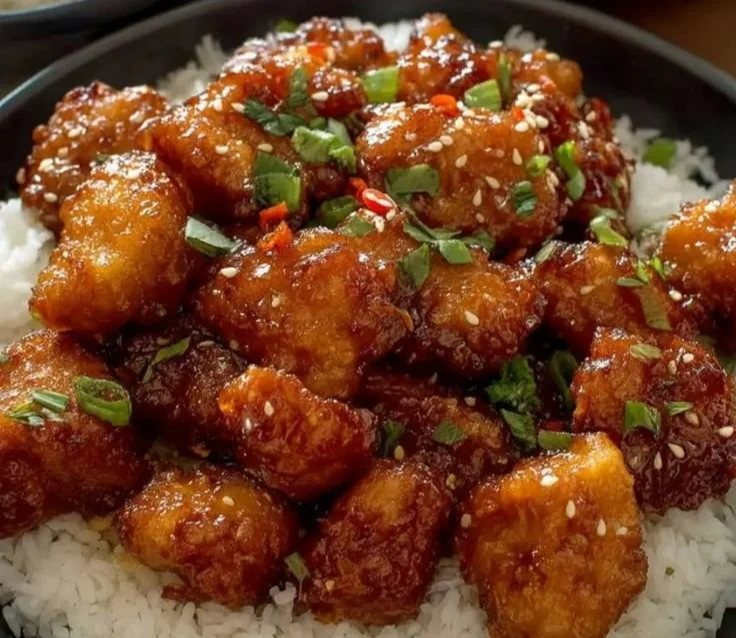
Imagine the sizzle of bite-sized chicken hitting hot oil, the immediate rush of toasty sesame and caramelized sugar filling the kitchen, and the first glossy, sticky bite that cracks with a light crunch before melting into savory-sweet warmth. General Tso’s Chicken is that irresistible combination of textures and flavors — crisp exterior, tender interior, and a sauce that balances salty, sweet, tangy, and umami in every spoonful. It’s the kind of dish that hugs you from the inside out: comforting on a rainy night, celebratory at a casual dinner party, and quick enough to feel like an indulgent weekday treat.
This recipe is perfect when you want something impressive without fuss. Serve it for family dinners, share it at neighborhood gatherings, or make it as the centerpiece of a relaxed weekend takeout-at-home night. The aroma alone will pull people to the table — and the first bite will make them stay.
Dish Snapshot
- Prep Time: 20 minutes
- Cook Time: 15 minutes (plus frying time)
- Total Time: ~35–40 minutes
- Servings: 4
- Difficulty Level: Easy to Moderate (requires frying and quick pan work)
Nutrition Highlights
Nutrition per serving (approximate; recipe yields 4 servings):
- Calories: ~630 kcal
- Protein: ~35 g
- Carbohydrates: ~77 g
- Fat: ~15 g
- Saturated fat: ~3 g
- Fiber: ~1–2 g
- Added sugar: ~12.5 g
- Sodium: ~2,100 mg
Notes on the nutrition above:
- These are estimates calculated from standard ingredient values (chicken breast, cornstarch, soy sauce, sugar, oils, rice, etc.) using USDA FoodData Central as a primary reference for raw ingredient composition. Sodium content is notably high because of the soy sauce and hoisin sauce—this can push a single serving close to or above the recommended single-meal sodium limit for some eaters. For guidance on sodium and heart-healthy limits, see recommendations from trusted health organizations such as the Mayo Clinic and the U.S. CDC.
Why You’ll Love It
Why this dish stands out:
- Flavor & aroma: The sauce glazes the chicken with layers of savory soy, mellow hoisin, bright rice vinegar, and caramel sweetness — a crowd-pleasing balance.
- Texture: A light, crisp coating gives way to juicy chicken; the contrast is the hallmark of the dish.
- Social and seasonal appeal: It’s an easy dish to scale up for guests, and its warm, sticky sauce makes it a cozy winner for cooler evenings and celebratory tables.
- Speed: With a little prep, you can have a restaurant-style plate on the table in under an hour.
- Flexibility: Simple swaps (tofu for chicken, tamari for soy sauce) adapt the recipe to many diets.
Step-by-Step Instructions
Ingredients
- 1 lb (about 450 g) chicken breast, cut into bite-sized pieces
- 1/2 cup cornstarch (for dredging)
- 1/2 cup soy sauce (regular or low-sodium)
- 1/4 cup rice vinegar
- 1/4 cup granulated sugar
- 2 tablespoons hoisin sauce
- 2 tablespoons sesame oil
- 2 cloves garlic, minced
- 1 teaspoon fresh ginger, minced
- 1 tablespoon vegetable oil (for frying)
- 2 green onions, chopped (for garnish)
- Cooked rice (for serving)
Optional ingredients and substitutions:
- For gluten-free: use tamari or coconut aminos instead of soy sauce; verify hoisin is GF or use a GF hoisin substitute.
- For less sodium: use low-sodium soy sauce and reduce the soy amount to 1/4 cup, then taste and adjust.
- To boost crispiness: add 1 egg white to the chicken before dredging, or use a 50/50 cornstarch-rice flour mix.
- For more heat: add 1–2 teaspoons chili paste (Sambal Oelek) or toss in dried red chiles when frying.
Method (follow these numbered steps)
- Make the sauce: In a bowl, whisk together the soy sauce, rice vinegar, sugar, hoisin sauce, sesame oil, minced garlic, and minced ginger. Set aside.
- Dredge the chicken: Pat the chicken pieces dry. Place cornstarch in a shallow bowl or tray and toss the chicken until evenly coated, shaking off excess.
- Heat the oil: Warm the vegetable oil in a large skillet or wok over medium-high heat. If you have a thermometer, aim for roughly 350°F (175°C) for deep-frying-style crisping.
- Fry the chicken: In batches (don’t overcrowd the pan), fry the chicken pieces until crispy and golden brown on the outside and cooked through (internal temperature should reach 165°F / 74°C). This usually takes 3–5 minutes per batch depending on size. Use tongs to turn pieces for even color.
- Drain: Remove the fried chicken to a paper towel-lined plate to drain excess oil. Briefly blot any very oily pieces.
- Finish the sauce: Using the same pan (wipe out excess oil if there’s too much), pour in the prepared sauce and bring it to a gentle simmer over medium heat. Cook 1–2 minutes so the sugar dissolves and the sauce begins to thicken. If you want a thicker glaze, dissolve 1 teaspoon cornstarch in 2 teaspoons cold water and stir into the simmering sauce.
- Toss to coat: Add the fried chicken back into the pan and toss quickly to coat each piece in the glossy sauce. Heat through for 30–60 seconds so the sauce clings to the chicken.
- Serve: Heap over fluffy rice, garnish with chopped green onions, and serve immediately.
Practical tips while you cook:
- Avoid overcrowding the pan when frying — crowding lowers oil temperature and yields soggy rather than crispy chicken.
- Pat chicken dry before dredging to help the cornstarch adhere.
- Use low-sodium soy sauce if you’re monitoring sodium; taste the sauce before adding all of it to adjust sweetness/salt.
- If you prefer less oil, you can shallow-fry or finish pieces in a 425°F oven for 6–8 minutes after a quick sear to crisp.
Best Pairings
- Rice: Steamed jasmine or long-grain white rice soaks up the sauce beautifully; serve about 1 cup cooked per person.
- Vegetables: Stir-fried broccoli, snow peas, or bok choy provide freshness and color; a simple sautéed green vegetable with garlic complements the richness.
- Noodles: Toss the chicken with plain lo mein or chow mein for a noodle-forward meal.
- Light sides: Pickled cucumbers or a small Asian-style slaw cut through the sweetness and add crunch.
- Beverage: A lightly chilled jasmine tea or a crisp lager refreshes the palate between sticky bites.
Storage Instructions
- Room temperature: Once cooked, General Tso’s Chicken should not be left at room temperature for more than 2 hours (USDA food-safety guideline).
- Refrigerator: Store cooled leftovers in an airtight container for 3–4 days. Reheat gently in a skillet or oven (350°F / 175°C until warmed through) to preserve texture. Microwave reheating is fine, but the coating will soften.
- Freezer: Freeze in a sealed container or heavy-duty freezer bag for up to 1–2 months. Thaw overnight in the refrigerator before reheating. For best texture after freezing, re-crisp the chicken in a 400°F oven for 8–10 minutes after reheating.
Chef’s Advice
- Oil temperature matters: Aim for consistent oil heat (around 350°F) for a crisp, light crust. If the oil is too cool, the chicken will absorb oil and become greasy.
- Double-dredge for ultra-crisp: For an extra-crisp finish, dip the cornstarch-coated pieces briefly in a beaten egg white, then dredge in cornstarch again before frying.
- Make the sauce to taste: Depending on your soy sauce (regular vs low-sodium) and personal preference, adjust sugar and vinegar. The sauce should be bold but balanced — if it tastes too sharp when raw, it will mellow after simmering.
- Keep fried pieces dry: After frying, rest chicken on a wire rack rather than paper towels if you want to keep it crisp longer before saucing.
- Time the assembly: Because the sauce is best hot and glossy, cook the sauce last and combine just before serving to preserve crispness.
Creative Twists
- Vegan General Tso’s: Use firm tofu pressed and cut into cubes (tossed in cornstarch and pan-fried or baked until crisp), swap hoisin and soy for GF/vegan variants as needed. Add toasted sesame seeds and extra scallions.
- Gluten-free version: Use tamari or gluten-free soy sauce and ensure hoisin is GF (or use a homemade GF hoisin). Use cornstarch or rice flour for dredging.
- Cauliflower “General Tso’s”: Roast or lightly fry cauliflower florets after a cornstarch coating; they get wonderfully crisp and soak up the sauce.
- Smoky-spicy twist: Add 1–2 teaspoons sambal oelek or chili garlic sauce to the sauce and finish with a sprinkle of toasted sesame seeds and thinly sliced dried red chiles.
- Lighter glaze: Replace half the sugar with a liquid sweetener like honey or maple syrup and reduce sesame oil to 1 tablespoon; use low-sodium soy sauce for a less intense sodium profile.
Recipe Q&A
Q: Can I use chicken thighs instead of breasts?
A: Yes — boneless, skinless thighs are juicier and forgiving; adjust frying time slightly because thighs can be thicker.
Q: How do I keep the coating crispy when serving later?
A: Keep fried chicken on a wire rack to drain and cool. Toss in sauce just before serving or re-crisp in a hot oven (425°F) for a few minutes before saucing.
Q: What’s the best substitute for hoisin?
A: A mix of 1 tablespoon soy sauce, 1 tablespoon peanut butter (or tahini), 1 teaspoon honey, and a pinch of five-spice or Chinese five-spice powder approximates hoisin’s sweet-savory profile.
Q: How can I reduce sugar without losing flavor?
A: Use 2 tablespoons sugar and 2 tablespoons honey or reduce sugar and add an extra splash of rice vinegar and a teaspoon of hoisin for more depth. Taste and balance.
Q: Are there healthier cooking methods?
A: Yes — bake or air-fry the dredged chicken to reduce oil usage, then toss with a lighter sauce (lower sugar, low-sodium soy).
Conclusion
If you’re craving a dish that’s equal parts comfort and showstopper, this General Tso’s Chicken delivers. Its crisp, saucy bites are perfect for sharing, and with a few small swaps you can adapt it to many diets and occasions. Try the recipe, make it your own, and share your photos and tweaks — food tastes better when enjoyed together.
Explore a trusted home-cook version of this classic on General Tso’s Chicken – RecipeTin Eats, and learn more about the dish’s background and cultural journey on General Tso’s chicken – Wikipedia.
Print
General Tso’s Chicken
- Total Time: 35 minutes
- Yield: 4 servings 1x
- Diet: Non-Vegetarian
Description
A savory-sweet dish with crispy chicken and a flavorful glaze that balances salty, sweet, tangy, and umami.
Ingredients
- 1 lb (about 450 g) chicken breast, cut into bite-sized pieces
- 1/2 cup cornstarch (for dredging)
- 1/2 cup soy sauce (regular or low-sodium)
- 1/4 cup rice vinegar
- 1/4 cup granulated sugar
- 2 tablespoons hoisin sauce
- 2 tablespoons sesame oil
- 2 cloves garlic, minced
- 1 teaspoon fresh ginger, minced
- 1 tablespoon vegetable oil (for frying)
- 2 green onions, chopped (for garnish)
- Cooked rice (for serving)
Instructions
- Make the sauce: In a bowl, whisk together the soy sauce, rice vinegar, sugar, hoisin sauce, sesame oil, minced garlic, and minced ginger. Set aside.
- Dredge the chicken: Pat the chicken pieces dry. Place cornstarch in a shallow bowl or tray and toss the chicken until evenly coated, shaking off excess.
- Heat the oil: Warm the vegetable oil in a large skillet or wok over medium-high heat.
- Fry the chicken: In batches, fry the chicken pieces until crispy and golden brown (about 3–5 minutes per batch). Use tongs to turn pieces for even color.
- Drain: Remove the fried chicken to a paper towel-lined plate to drain excess oil.
- Finish the sauce: In the same pan, pour in the prepared sauce and bring it to a gentle simmer. Cook for 1–2 minutes to dissolve the sugar and thicken the sauce.
- Toss to coat: Add the fried chicken back into the pan and toss quickly to coat each piece in the glossy sauce.
- Serve: Serve over cooked rice, garnished with chopped green onions.
Notes
For gluten-free, use tamari or coconut aminos instead of soy sauce; verify hoisin sauce is GF. For less sodium, use low-sodium soy sauce and adjust quantities.
- Prep Time: 20 minutes
- Cook Time: 15 minutes
- Category: Main Course
- Method: Frying
- Cuisine: Chinese
Nutrition
- Serving Size: 1 serving
- Calories: 630
- Sugar: 12.5g
- Sodium: 2100mg
- Fat: 15g
- Saturated Fat: 3g
- Unsaturated Fat: 3g
- Trans Fat: 0g
- Carbohydrates: 77g
- Fiber: 1g
- Protein: 35g
- Cholesterol: 70mg