Simple Color-Changing Magic Lemonade
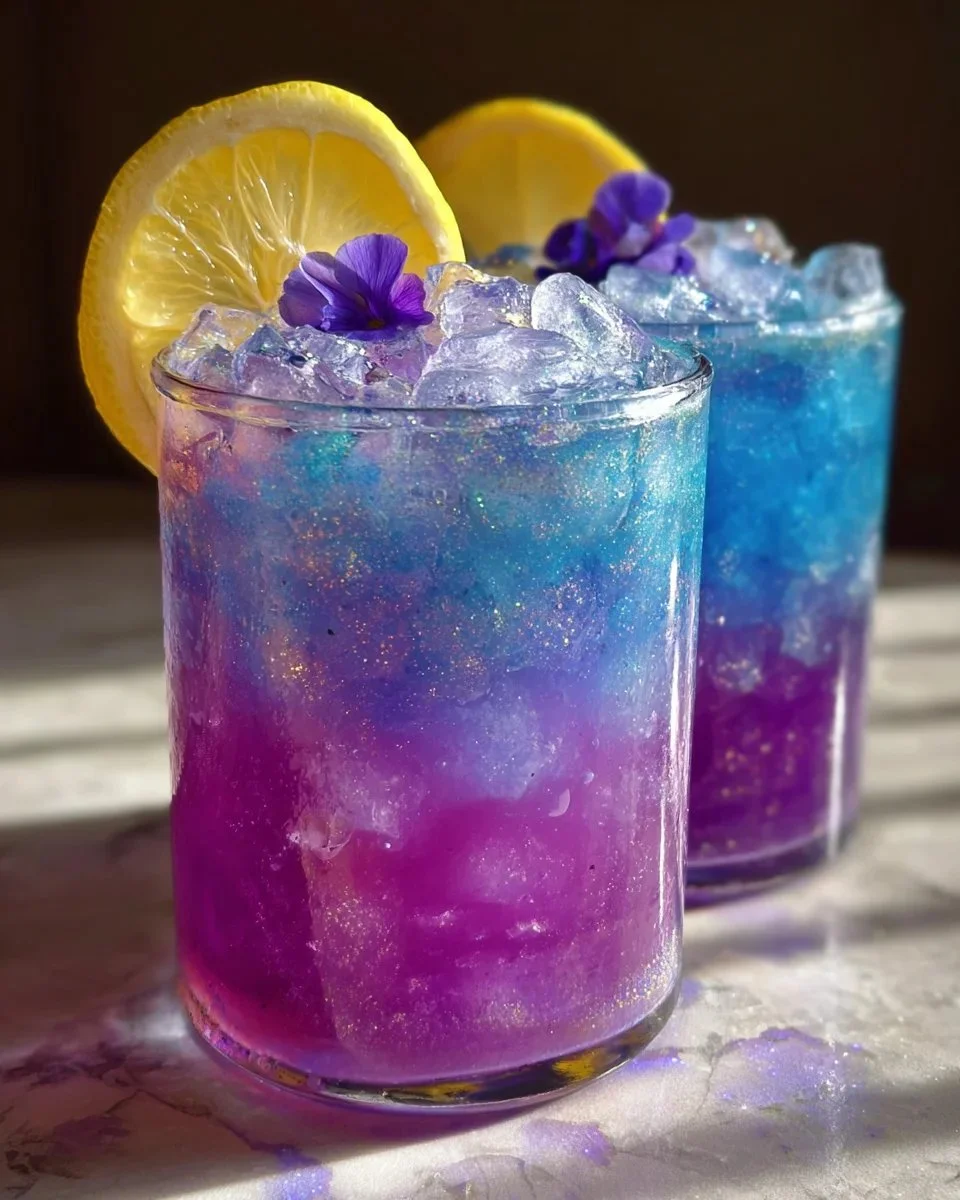
Imagine a glass that shimmers a cool indigo, its aroma bright with citrus memory and a whisper of floral earthiness. When lemon juice meets the deep-blue tea made from butterfly pea flowers, the drink performs a gentle chemical waltz—shifting from sapphire to blushing pink before your eyes. The first sip is crisp and sparkling: tart lemon that wakes the palate, tempered by a round, caramel warmth from brown sugar and a delicate, tea-like silk from the blue pea infusion. Ice clinks like tiny bells; the texture is light and thirst-quenching, with a playful, almost magical visual surprise that invites laughter.
This Simple Color-Changing Magic Lemonade is perfect for lazy summer afternoons, backyard gatherings, kids’ parties, or anytime you want a little theatrical flourish without fuss. It’s an easy way to elevate a table—serve it at baby showers, spring picnics, or a cozy brunch to spark conversation. For the curious who enjoy small science experiments in the kitchen, this is both a sensory treat and a showstopper.
For a deeper look at the original inspiration and variations, check the original recipe page.
Recipe Details
- Prep Time: 10 minutes
- Cook Time: 5 minutes (steeping)
- Total Time: 15 minutes
- Servings: 4 (about 12 oz / 350 mL per serving)
- Difficulty Level: Easy
Nutrition Highlights
Nutrition per serving (approximate)
- Calories: 230 kcal
- Protein: 0.3 g
- Total Carbohydrates: 55 g
- Sugars: ~55 g
- Fiber: 0.5 g
- Total Fat: 0.0 g
- Sodium: 5 mg
- Vitamin C: ~15% DV (from lemon juice)
Notes on accuracy and sources:
- These values are estimates calculated using USDA FoodData Central values for brown sugar and lemon juice and standard portion sizes. Sugar (1 cup packed brown sugar ≈ 220 g) is the primary calorie contributor. For authoritative guidance on added sugar and daily limits, consult resources such as the USDA FoodData Central and the Mayo Clinic. Nutrition is presented per serving assuming four servings; actual values will vary with exact measurements and substitutions.
Perfect For…
- Entertaining: The color change is an instant conversation starter—ideal for parties or themed gatherings.
- Family moments: Kids love the visual magic; it’s a great way to teach a tiny bit of kitchen chemistry.
- Quick, low-effort refreshment: Steeps fast and mixes in minutes—perfect when you want something impressive without complexity.
- Seasonal celebration: Bright and floral for spring, cooling and hydrating for summer—this lemonade adapts to many occasions.
Preparation Guide
Ingredients
- Handful (about 1–2 teaspoons dried) butterfly pea flowers (or 1 tablespoon dried, depending on strength)
- 1 cup packed brown sugar (or 3/4 cup honey / maple syrup as natural sweetener)
- 1 cup boiling water
- 2 cups room-temperature filtered water
- Juice of 1–2 lemons (about 1/3–2/3 cup / 80–160 mL), to taste
- Ice for serving
Optional ingredients and substitutions
- Lavender extract: 1/4 teaspoon (optional, adds delicate floral note)
- Sparkling water: substitute up to 2 cups for a fizzy version (add just before serving)
- Honey or maple syrup: use 3/4 cup instead of 1 cup brown sugar; adjust to taste
- Fresh mint or basil sprigs for garnish
- Use fewer butterfly pea flowers for a paler color, or more for saturated blues
Method & Process
- Boil 1 cup of water in a small pot or kettle.
- Place the butterfly pea flowers in a heatproof container and pour the boiling water over them. Steep for 5 minutes (or until the liquid is a deep blue).
- Strain the blue tea through a fine mesh sieve into a bowl or pitcher, discarding the spent flowers.
- While the tea is still warm, stir in the brown sugar (or honey/maple syrup) until fully dissolved. If using honey or maple syrup, stirring into warm—not boiling—liquid helps it blend smoothly.
- Add 2 cups of room-temperature filtered water and, if using, 1/4 teaspoon lavender extract. Stir gently to combine.
- Fill glasses with ice and pour the blue lemonade over the ice.
- Add lemon juice to each glass at the table (or pour into the pitcher) and watch the color shift from blue to purple to pink depending on the acidity added.
- Garnish with a lemon wheel or fresh herb and serve immediately.
Practical tips
- Taste as you go: acidity and sweetness preferences vary—start with juice of 1 lemon and add more if you want a brighter tang.
- Avoid over-steeping the flowers; prolonged steeping can introduce slightly vegetal notes.
- If making a sparkling version, add sparkling water just before serving to retain fizz.
- Keep lemon juice cold and add it at the end to maximize the color-change spectacle.
Presentation Tips
- Serve in clear glassware so the color change is visible—tall Collins glasses or mason jars work especially well.
- Garnish with a thin lemon wheel placed on the rim and a sprig of mint for fragrance.
- For parties, set up a “mix-your-own” station with blue lemonade in a pitcher and small bowls of lemon slices so guests can trigger their own color transformations.
- Pair with light finger foods—cucumber sandwiches, shortbread cookies, or fresh fruit skewers complement the drink’s bright profile.
- For themed celebrations (fairy-tale, galaxy, or Disney-inspired), coordinate with dessert ideas—browse creative cake inspirations like these magical Disney cake ideas for matching visual flair.
Keeping it Fresh
- Room temperature: Not recommended to leave lemonade at room temperature for more than 2 hours (follow CDC food safety guidance to avoid bacterial growth).
- Refrigeration: Store in an airtight pitcher or container in the refrigerator for up to 3–5 days. For best color and flavor, consume within 48–72 hours.
- Freezer: You can freeze lemonade in an airtight container for up to 3 months; thaw in the refrigerator and stir well before serving. If using sparkling water, freeze only the non-carbonated base and add fizz after thawing.
Insider Secrets
- Strength of color: Freshness and amount of butterfly pea flowers determine the depth of blue. Start with a small handful and increase for deeper hues.
- Acidity control: Different lemons have different acidity. Meyer lemons are sweeter and produce a softer color change; regular Eureka or Lisbon lemons are tarter and produce a more dramatic shift.
- Balanced sweetness: If you prefer a cleaner citrus pop, use honey or a light simple syrup (1:1 sugar to water) instead of packed brown sugar; brown sugar adds warmth and a slight caramel note.
- Texture tip: If using sparkling water, keep it chilled and add to each glass individually to maintain effervescence.
- Aesthetic trick: Freeze edible flowers or thin lemon slices into ice cubes for garnish that keeps the visual theme while preventing dilution.
Fun Flavor Ideas
- Lavender Pink Lemonade: Add 1/4 teaspoon culinary lavender extract and swap brown sugar for honey; garnish with lavender sprigs.
- Sparkling Galaxy Lemonade: Replace the 2 cups room-temperature water with chilled sparkling water and serve in coupe glasses for an effervescent show.
- Citrus Berry Twist: Muddle 1/4 cup raspberries per pitcher into the lemonade before adding lemon juice for an extra berry-pink color and flavor depth.
- Low-Sugar Version: Use 1/2 cup honey or 1/4 cup erythritol + 1/4 cup maple syrup as a lower-calorie sweetener and increase water to taste.
- Boozy Variation (adult only): Add 1–2 ounces of vodka or gin per glass for a cocktail version—stir gently and garnish with a lemon twist.
All Your Questions Answered
Q: Can I use fresh blue pea flowers instead of dried?
A: Yes—use about twice the volume of fresh flowers compared to dried. Steep the same way but watch strength and flavor.
Q: My lemonade turned muddy—what happened?
A: Over-steeping the flowers or using very cloudy water can make the tea murkier. Strain carefully and don’t steep more than 7 minutes.
Q: How can I make this less sweet?
A: Reduce the sugar by 25–50% and taste. Adding a splash of sparkling water can also dilute sweetness while adding freshness.
Q: Will the color change still happen with honey or maple syrup?
A: Yes—the acid-base color change is driven by lemon juice interacting with the anthocyanins in butterfly pea flowers and is independent of the sweetener used.
Q: Can I make this in large batches for parties?
A: Yes—multiply ingredients proportionally and keep the blue tea and lemon juice separate until serving to preserve the color surprise.
Conclusion
This Simple Color-Changing Magic Lemonade is an easy, beautiful way to bring a touch of wonder to ordinary gatherings—cold, bright, and picture-perfect. Try it, tweak the sweetness to your liking, and share the moment with friends and family. For a fun video walkthrough and a slushie spin on the concept, see this lively guide on Color Changing Lemonade (Galaxy Lemonade) + VIDEO, and for another kid-friendly tutorial, check out the step-by-step Magic Color-Changing Galaxy Lemonade (with Video).
If you make this recipe, I’d love to hear about your color combos and garnishes—snap a photo, leave a comment, or join our community to swap ideas.