Introduction
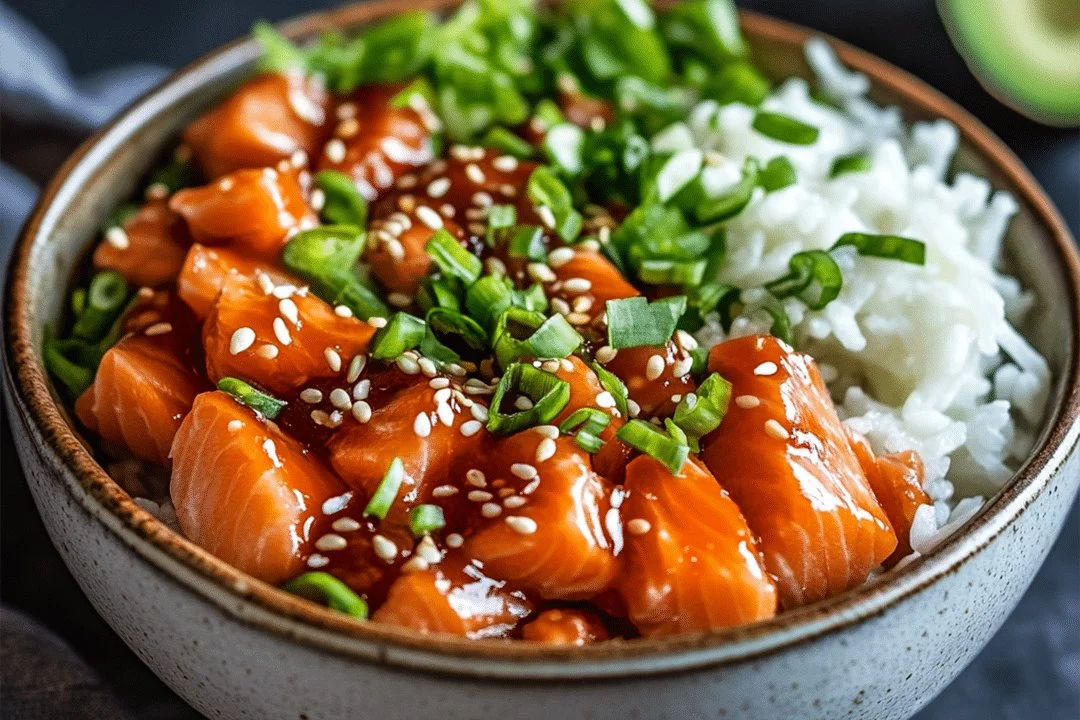
Imagine the sizzle of salmon hitting a hot skillet — the crackle of the skin, the warm, nutty aroma of sesame oil and soy mingling with honey, and the sight of glossy, caramelized fillets resting on a bed of steaming jasmine rice. Each bite delivers a contrast: a crisp, crackling exterior giving way to tender, flaky salmon, creamy avocado, cool cucumber, and sweet carrots, all tied together by a savory-sweet drizzle. This Crispy Salmon and Rice Bowl is the kind of recipe that comforts the soul and excites the palate.
Whether you’re craving a quick weeknight victory, feeding two at a cozy dinner, or assembling an impressive bowl for a small gathering, this dish hits the sweet spot between approachable and restaurant-worthy. If you enjoy hearty bowls with personality, you might also like my take on creamy Cajun chicken and rice bowls for a spicier rotation in your meal plan.
Dish Snapshot
- Prep Time: 10 minutes
- Cook Time: 10 minutes
- Total Time: 20 minutes
- Servings: 2 bowls (one fillet per person)
- Difficulty Level: Easy — great for cooks of any level
Nutrition Information
Estimated nutrition per serving (recipe yields 2 servings). These values are estimates based on standard portion sizes and nutrient profiles from USDA FoodData Central and are consistent with general guidance from government nutrition sources and health organizations.
- Calories: ~820 kcal
- Protein: ~50 g
- Carbohydrates: ~59 g
- Fat: ~46 g
- Saturated Fat: ~7 g
- Fiber: ~4 g
- Sodium: ~800–1,000 mg (varies by soy sauce and added salt)
Notes on the numbers: calorie and macronutrient estimates come from ingredient portion averages (6 oz salmon fillet, 1 cup cooked jasmine rice, olive oil, sesame oil, avocado, edamame, etc.) and the USDA FoodData Central database. If you need lower sodium, use reduced-sodium soy sauce or less soy sauce and avoid extra table salt (CDC and other public health sources recommend monitoring sodium intake).
Why You’ll Love It
- Flavor & Texture: You get maximum contrast — ultra-crispy salmon skin, silky cooked flesh, and bright, crunchy veg. The sesame-honey-soy dressing adds savory depth with a touch of sweetness and umami.
- Speed & Ease: Ready in about 20 minutes from start to finish; perfect for busy evenings when you want something nourishing but fast.
- Health Perks: Salmon is rich in high-quality protein and omega-3 fatty acids; paired with fiber from vegetables and healthy monounsaturated fats from avocado, this bowl supports balanced nutrition.
- Crowd Appeal: Simple to scale and visually appealing — great for small gatherings or meal-prep lunches.
Step-by-Step Instructions
Ingredients
- 2 salmon fillets (skin-on), about 6 oz (170 g) each
- 1 tablespoon olive oil
- Salt and pepper to taste
- 1 teaspoon garlic powder
- 1 teaspoon smoked paprika
- 2 cups cooked jasmine rice or brown rice (about 1 cup uncooked)
- 1/2 avocado, sliced
- 1/4 cup cucumber, thinly sliced
- 1/4 cup shredded carrots
- 1/4 cup edamame (steamed, shelled)
- 1 tablespoon sesame seeds (for garnish)
For the sauce:
- 2 tablespoons soy sauce (low sodium recommended)
- 1 tablespoon sesame oil
- 1 teaspoon honey
- 1 teaspoon rice vinegar
- 1/2 teaspoon sriracha (optional for spice)
Optional ingredients and substitutions
- Use tamari or coconut aminos for a gluten-free soy alternative.
- Replace jasmine rice with brown rice or quinoa for more fiber. For a Mexican twist, serve with Andy’s homemade Mexican rice instead of jasmine.
- Swap honey for maple syrup for a vegan-friendly glaze (also swap salmon for tofu to make the bowl vegetarian).
- Add pickled red onion or kimchi for tang and complexity.
Method (numbered instructions)
- Prep the salmon: Pat the salmon fillets dry with paper towels. Season both sides with salt, pepper, garlic powder, and smoked paprika. Let rest a few minutes while you heat the pan.
- Heat the pan: Place a non-stick or stainless steel skillet over medium-high heat and add the olive oil. When the oil shimmers, place the salmon fillets skin-side down.
- Crisp the skin: Cook skin-side down for 4–5 minutes without moving the fillets so the skin gets deeply crispy. Reduce heat slightly if the oil smokes.
- Flip and finish: Carefully flip the salmon and cook an additional 3–4 minutes (depending on thickness) until the salmon registers 125–130°F (52–54°C) for medium-rare to medium, or cook to your preferred doneness. Remove from the pan and rest briefly.
- Make the sauce: While the salmon cooks, whisk together soy sauce, sesame oil, honey, rice vinegar, and sriracha in a small bowl. Taste and adjust seasoning.
- Assemble the bowls: Divide the cooked rice between two bowls. Top with crispy salmon, sliced avocado, cucumber, shredded carrots, and edamame.
- Finish and serve: Drizzle the sauce over each bowl and sprinkle with sesame seeds.
Practical tips
- Dry the salmon thoroughly before seasoning — excess moisture prevents crisp skin.
- Use medium-high heat for crispness but watch for smoking oil; lower the heat if it browns too fast.
- Check doneness with an instant-read thermometer if unsure. Salmon flakes easily at the thickest part when done.
- If using brown rice or quinoa, let the grains be slightly underdone before resting; they continue to soften.
Best Pairings
- Light sides: Pickled ginger, a simple seaweed salad, or steamed greens (bok choy or baby spinach) brighten the bowl.
- Drinks: A crisp white wine (Sauvignon Blanc) or a light lager pairs well; for non-alcoholic, chilled green tea or citrus-infused water complements the flavors.
- Sauces & condiments: Extra sriracha or gochujang for heat; a dollop of wasabi mayo adds a creamy kick.
- Swap the grain: For a Tex‑Mex twist, serve over Andy’s homemade Mexican rice or use brown rice for more fiber.
Storing Leftovers
- Room temperature: Do not leave cooked salmon or rice at room temperature for more than 2 hours (1 hour if ambient temperature is above 90°F / 32°C).
- Refrigerator: Store components in airtight containers for up to 3–4 days. For best texture, store the salmon and rice separately from avocado and sliced cucumber.
- Freezer: Cooked salmon and rice can be frozen for best quality up to 1–2 months. Wrap salmon tightly or freeze in an airtight container; thaw overnight in the refrigerator before reheating.
Chef’s Advice
- Best salmon types: Wild-caught Atlantic, sockeye, or coho have good flavor and texture for pan-searing; farmed Atlantic is also widely available and cooks reliably.
- Skin crisping key: Use a hot pan, press gently for the first 20 seconds to flatten skin-to-pan contact if your fillets curl. Do not move the fillet until the skin releases naturally.
- Flavor layering: Smoked paprika brings a subtle smokiness — smoke the dish with a quick dash of smoked salt or a smoked chili oil for a deeper profile.
- Reheating: Reheat in a skillet over low heat with a splash of oil to revive crispness rather than microwaving (which makes skin soggy).
Delicious Variations
- Spicy Korean-Style Bowl: Swap the sauce for a gochujang-sesame glaze, add kimchi, and top with a fried egg.
- Citrus Ginger Twist: Add orange or yuzu zest to the dressing, swap sesame oil for grapeseed, and top with pickled radish for brightness.
- Vegan Swap: Replace salmon with marinated and pan-fried tofu (press tofu, coat in cornstarch, then pan-fry until crisp) and use maple in the sauce.
- Poke-Inspired: Dice the salmon and marinate briefly in soy-sesame; serve cold over sushi rice with seaweed salad and tobiko.
Frequently Asked Questions
Q: Can I make this ahead for meal prep?
A: Yes. Cook the rice and salmon ahead, then store separately. Reheat salmon gently in a skillet to refresh the skin, or enjoy cold in a salad bowl. Assemble fresh veggies just before serving.
Q: What if I don’t have sesame oil or sesame seeds?
A: You can omit sesame oil and replace with a neutral oil; the flavor will be slightly different. Toasted sesame seeds add nuttiness but are optional.
Q: How do I know when the salmon is cooked through?
A: Use an instant-read thermometer: 125–130°F (52–54°C) gives medium; 140°F (60°C) is well-done. Visually, salmon should flake easily and be opaque through most of the fillet.
Q: Is this recipe low-sodium?
A: Not by default — soy sauce contributes most of the sodium. Use low-sodium soy or reduce the amount to lower sodium content. The USDA and CDC recommend mindful sodium intake.
Q: Can I use frozen salmon?
A: Yes — thaw completely and pat dry before cooking for the best crust and even cooking.
Conclusion
Give this Crispy Salmon and Rice Bowl a try the next time you want dinner that feels like both comfort food and a chef’s plate — fast, vibrant, and full of contrast. If you want another successful bowl formula to keep in your rotation, check out Fox and Briar’s Crispy Salmon Rice Bowls for inspiration, and for a slightly different technique and presentation see The Best Crispy Rice & Salmon Bowl Recipe from No Crumbs Left.
If you make it, please share a photo and let me know how you tweaked it — I love hearing about your twists and wins.
Printable Recipe Card
Want just the essential recipe details without scrolling through the article? Get our printable recipe card with just the ingredients and instructions.