At a Glance
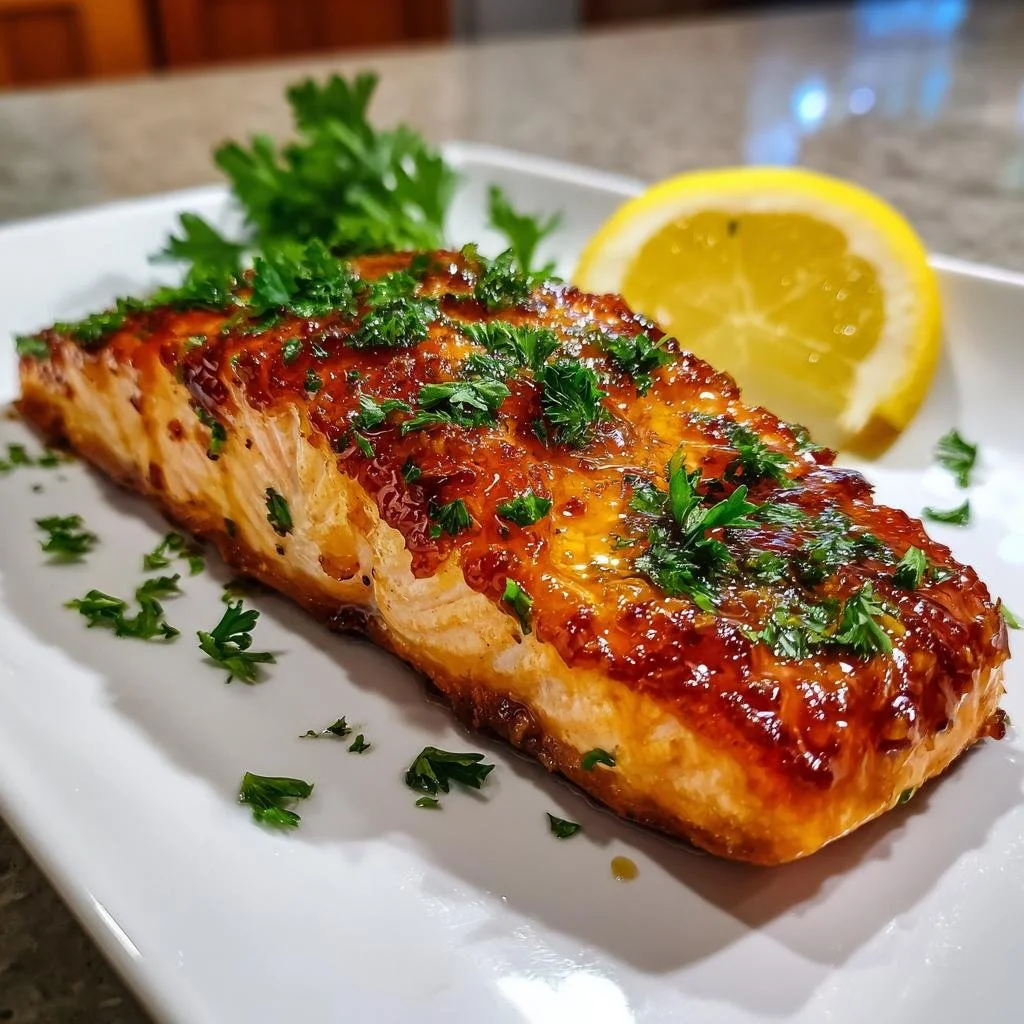
Picture this: a warm, bronzed fillet coming out of the oven, the honey-garlic butter bubbling and caramelizing at the edges. The first inhale brings a sweet-savory perfume of honey and garlic, cut through by a bright squeeze of lemon; the flesh flakes in tender layers and melts on the tongue, with a whisper of butter and a satisfying caramelized finish. This Easy 25-Minute Honey Garlic Butter Baked Salmon is both comforting and celebratory — elegant enough for guests, quick enough for a weeknight. It’s the kind of recipe that already feels like home the moment you turn on the oven.
If you love simple sheet-pan seafood dinners, you might also enjoy this easy sheet-pan garlic butter salmon with spinach recipe for another fast, flavorful option: easy sheet-pan garlic butter salmon with spinach.
At a Glance
- Prep Time: 5 minutes
- Cook Time: 12–15 minutes (plus optional 1–2 minute broil)
- Total Time: ~25 minutes
- Servings: 4 (one 6-ounce fillet per person)
- Difficulty: Easy
Nutrition Highlights
Estimated nutrition per serving (one 6-ounce salmon fillet with glaze). Values are approximate and rounded; estimates are based on USDA FoodData Central composition for Atlantic salmon and standard nutrition values for butter, honey, and soy sauce. For individualized guidance on nutrient needs, consult resources like the Mayo Clinic.
- Calories: ~435 kcal
- Protein: ~36–38 g
- Total Carbohydrates: ~8–9 g (mostly from honey)
- Total Fat: ~27 g
- Saturated Fat: ~6 g
- Sodium: ~350–500 mg (depends on added salt and soy sauce; use low-sodium tamari to reduce)
- Fiber: 0 g
- Sugars: ~8–9 g (from honey)
Why You’ll Love It
This recipe hits several sweet spots at once:
- Speed: Ready in about 25 minutes from start to finish — perfect for busy weeknights.
- Flavor: The honey-garlic butter glaze gives bright sweetness, savory depth from soy, and buttery richness that contrasts beautifully with the salmon’s natural umami.
- Comfort + Occasion: It’s cozy and familiar for family dinners yet polished enough for casual entertaining or a simple date night at home.
- Nutrition: Salmon is an excellent source of high-quality protein and omega-3 fatty acids, supporting heart and brain health (see reputable sources like the CDC and Mayo Clinic for diet recommendations).
- Versatility: Easy to tweak — swap tamari for gluten-free, increase heat, or add herbs for a fresher finish.
Method & Process
Ingredients
- 4 (6-ounce) salmon fillets, skin on or off
- 2 tablespoons unsalted butter, melted (divided across fillets)
- 2 tablespoons honey
- 2 cloves garlic, minced
- 1 tablespoon soy sauce or tamari
- 1 teaspoon Dijon mustard
- 1/2 teaspoon paprika
- 1/4 teaspoon black pepper
- Salt to taste
- Fresh parsley, chopped (for garnish)
- Lemon wedges (for serving)
Optional ingredients and substitutions:
- Use low-sodium tamari to make the recipe gluten-free and lower in sodium.
- Swap honey for maple syrup for a slightly different sweetness and flavor profile.
- Replace butter with olive oil or vegan butter to reduce saturated fat or make dairy-free.
- Add a pinch of red pepper flakes or 1 teaspoon Sriracha for heat.
- For a citrus twist, add 1 teaspoon lemon zest into the glaze.
Step-by-step directions
- Preheat the oven to 400°F (200°C). Line a baking sheet with parchment paper or aluminum foil for easy cleanup.
- Pat the salmon fillets dry using paper towels. Season both sides lightly with salt and pepper. Place the fillets on the prepared baking sheet, skin-side down if the skin is on.
- In a small bowl, whisk together the melted butter, honey, minced garlic, soy sauce (or tamari), Dijon mustard, and paprika until well combined. This becomes your honey-garlic butter glaze.
- Spoon the glaze evenly over the top of each salmon fillet, making sure the tops are well coated.
- Bake for 12 to 15 minutes, depending on the thickness of your fillets, until the salmon is opaque and flakes easily with a fork. Aim for an internal temperature of 125–130°F (52–54°C) for medium-rare to medium, or 145°F (63°C) if you prefer fully done.
- For crisper, caramelized edges, broil for the last 1–2 minutes — watch closely to prevent burning.
- Remove salmon from the oven. Garnish with fresh chopped parsley and serve immediately with lemon wedges.
Practical tips
- Avoid overcooking: salmon will continue to cook slightly after you remove it from the oven. Test doneness at the thickest part.
- Even glazing: use the back of a spoon to spread glaze, leaving some on top rather than pooling on the tray to get a nice caramelized finish.
- If using skin-on fillets, pat the skin dry and place skin-side down to help the skin crisp if you broil.
Best Pairings
Serve It Up
- Light & bright: Steamed or roasted asparagus, blanched green beans, or a simple arugula salad with lemon vinaigrette.
- Hearty sides: Garlic mashed potatoes, buttery orzo, or coconut-lime quinoa for a textural contrast.
- Grain bowls: Serve over brown rice or cauliflower rice with shredded cabbage and avocado for a fast bowl meal.
- Sauces & extras: Dollop with a lemon-herb yogurt sauce, spoon on extra warmed glaze, or finish with microgreens and toasted sesame seeds.
- Beverage pairings: Crisp white wine (Sauvignon Blanc, Pinot Grigio), a light-bodied Pinot Noir, or a citrus-forward iced tea.
You can also explore different sheet-pan salmon preparations for more weeknight ideas in this other recipe: easy sheet-pan garlic butter salmon and spinach.
Shelf Life & Storage
How to store safely
- Room temperature: Do not leave cooked salmon at room temperature for more than 2 hours (1 hour if room is above 90°F/32°C).
- Refrigeration: Store cooled salmon in an airtight container in the refrigerator for 3–4 days.
- Freezer: For longer storage, wrap portions tightly with plastic wrap and foil or use a vacuum sealer; keep in the freezer up to 2–3 months. Thaw overnight in the refrigerator before reheating.
- Reheating: Reheat gently in a 275°F (135°C) oven for 10–15 minutes until warmed through to avoid drying. Alternatively, reheat in a skillet over low heat with a splash of water and covered, or enjoy cold in salads.
Chef’s Advice
- Choose the right salmon: Wild-caught (when in season) and farmed Atlantic salmon have different fat contents — farmed tends to be richer and more forgiving; wild tends to be leaner and more flavorful. Pick fillets with firm flesh and a fresh scent.
- Thickness matters: Adjust bake time based on thickness. A rough rule: 4–6 minutes per 1/2 inch of thickness at 400°F. Thicker fillets need the full 12–15 minutes; thin fillets may be done sooner.
- Flavor layering: Let the glaze sit a minute after whisking so the garlic softens into the honey for a more harmonious flavor.
- Texture cue: Salmon is done when it flakes easily with a fork and the color shifts from translucent to opaque; use an instant-read thermometer for precision.
Creative Twists
Fun Flavor Ideas
- Spicy-Sesame Honey Garlic: Add 1 teaspoon toasted sesame oil, 1 teaspoon Sriracha, and garnish with toasted sesame seeds and sliced scallions.
- Citrus-Herb Finish: Mix 1 teaspoon lemon zest and 1 tablespoon chopped dill into the glaze; serve with lemon slices and extra herbs.
- Miso-Honey Glaze (Umami Boost): Substitute 1 tablespoon of the honey with 1 tablespoon white miso paste (thin with a little water), reduce soy sauce to 1/2 tablespoon. This gives a rich, savory depth.
- Vegan Alternative: Replace salmon with firm tofu or roasted cauliflower steaks; follow the same glaze and roast until caramelized (time will vary).
- Low-Sugar Version: Use 1 tablespoon honey + 1 tablespoon apple cider vinegar and a pinch of stevia to reduce sugar while keeping tang and balance.
Frequently Asked Questions
Q: Can I use frozen salmon fillets?
A: Yes — thaw fully in the refrigerator overnight, pat dry, and proceed. Avoid cooking from frozen or the glaze won’t adhere properly and cook times will be uneven.
Q: My glaze burned under the broiler — how can I prevent this?
A: Watch closely during broiling (it only takes 1–2 minutes). If your glaze has a lot of sugar, move the rack lower in the oven or only broil for a very short time.
Q: Is there a way to make this gluten-free?
A: Yes — use tamari or a gluten-free soy sauce alternative. Also check labels on Dijon mustard to ensure it’s gluten-free.
Q: How can I reduce calories or saturated fat?
A: Reduce butter by half and replace with extra-virgin olive oil, or use a light olive oil spray. Swap full butter for a plant-based butter to lower saturated fat.
Q: Leftover ideas?
A: Flake chilled salmon into salads, mix into mayo or Greek yogurt with lemon for sandwiches, or reheat gently and serve alongside scrambled eggs for a decadent breakfast.
Conclusion
This Easy 25-Minute Honey Garlic Butter Baked Salmon is a reliable weeknight showstopper — fast, flavorful, and flexible. Try it as written, experiment with the creative twists, and share your plating or tweaks with the community; there’s always room for more delicious variations at the table.
For a bright citrus variation that’s also quick, see the baked lemon garlic salmon from Sally’s Baking Addiction: Sally’s baked lemon garlic salmon.
If you want a bowl-style meal with similar honey-garlic flavors, check out the honey garlic salmon bowls at Half Baked Harvest: 30 Minute Chili Honey Garlic Salmon Bowls.
And for another quick garlic-forward salmon recipe that’s earned fans, take a look at Simply Recipes’ 25-minute salmon: This 25-Minute Salmon Recipe Is My New Favorite.
If you try the recipe, please leave a comment or a photo — I’d love to hear how you made it yours.