
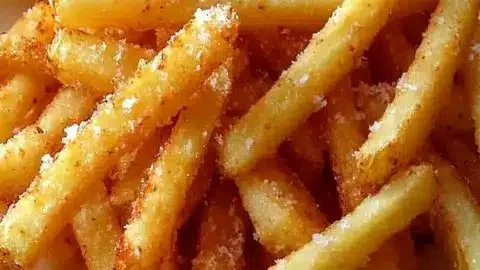
Gordon Ramsay’s Crispy French Fries: Homemade Perfection Awaits
Introduction
The moment a batch of these fries hits the plate, your kitchen fills with a warm, golden aroma—slightly sweet potato starch meeting toasted oil—and you can hear the crunch even before the first bite. The exterior is impossibly crisp; the interior, pillowy and light, offering that perfect contrast that makes you reach for another. These are not just fries; they’re comfort in finger-food form: nostalgic, crowd-pleasing, and quietly thrilling.
Whether you’re feeding a hungry family after a long day, building the perfect burger for a weekend cookout, chasing comfort on a rainy afternoon, or serving a festive spread where everyone keeps coming back for more, these fries deliver. For a deep-dive on technique and another perspective on perfect homemade fries, check this crispy homemade French fries guide that pairs well with this method.
At a Glance
- Prep Time: 25 minutes (includes soaking and drying)
- Cook Time: 20–25 minutes (two-stage frying)
- Total Time: ~50 minutes
- Servings: 4 (as a side)
- Difficulty Level: Intermediate (requires attention to oil temperature and timing)
Nutrition Highlights
Per serving (1/4 of recipe). These are approximate values, calculated from USDA FoodData Central values for russet potatoes and standard vegetable oil absorption estimates. For general health context on fats and portioning, see guidance from Mayo Clinic.
- Calories: ~370 kcal
- Protein: ~6 g
- Carbohydrates: ~52 g
- Fat: ~15 g
- Fiber: ~4 g
- Sodium: variable (depends on finishing salt)
Notes: Because frying oil absorption varies with technique and potato moisture, calories can shift ±15–20%. This estimate assumes roughly 60 g of oil absorbed for the total batch. For lower calories, consider oven-baking or using an air fryer; however, the classic double-fry method below produces the signature texture.
Why You’ll Love It
These fries win hearts for several reasons:
- Texture & Flavor: The double-fry method creates a sweet, fluffy interior and a shattering exterior that holds salt and dips beautifully.
- Emotional Pull: Crisp fries evoke shared memories—street-side snacks, childhood kitchens, or late-night comfort.
- Versatility: They pair with everything from a quick sandwich to an elevated steak dinner.
- Technique Satisfaction: This recipe teaches transferable skills—temperature control, blanching vs. frying—that improve many fried dishes.
How to Make Gordon Ramsay’s Crispy French Fries: Homemade Perfection Awaits
Ingredients
- 4 large floury potatoes (Russet), about 300–350 g each (best for a fluffy interior and crispy exterior)
- 2 tablespoons white vinegar (helps enhance flavor and keep fries crispier)
- 1 tablespoon kosher salt (for seasoning the blanching water)
- Oil as needed (canola or vegetable oil; high smoke point)
- Salt for seasoning to taste (finishing)
Optional ingredients and substitutions:
- Swap white vinegar for apple cider vinegar (same acid effect, slightly fruitier note).
- Use sunflower oil or peanut oil instead of canola for a different frying flavor (ensure no allergies).
- For a lower-fat version, follow cooking method but roast at 220°C/425°F with a light spray of oil (result is less crisp but still tasty).
Preparation
- Peel the potatoes (optional if you prefer skin-on) and cut them into 8–10 mm (about 3/8–1/2 inch) sticks. Aim for consistent size so they cook evenly.
- Rinse the cut potatoes under cold water until the rinsing water runs clear to remove surface starch.
- Place potatoes in a large bowl of cold water with 2 tablespoons white vinegar and the tablespoon of kosher salt. Soak for 20–30 minutes. This firms the exterior and reduces sugar loss.
- Drain and rinse, then spread the fries on clean kitchen towels or paper towels. Pat them completely dry—moisture is the enemy of crispness.
First Fry (Blanch / Cook Through)
5. Pour oil into a heavy-bottomed pot or deep fryer to a depth of 3–4 inches. Heat to 150°C / 300°F (low–medium). Use a thermometer; accurate temperature is key.
6. Fry fries in small batches (do not overcrowd) for 4–6 minutes until pale, soft, and cooked through but not browned. They should be flexible and slightly translucent.
7. Remove with a slotted spoon to a wire rack or a tray lined with paper towels. Let them rest for 10–20 minutes. This drying period prepares them for the final fry.
Second Fry (Crisping)
8. Increase oil temperature to 190–195°C / 375–385°F (hot). Again, work in small batches.
9. Fry each batch for 2–3 minutes until golden brown and crisp. Keep an eye—browning happens fast.
10. Remove and drain briefly on a wire rack; immediately season generously with salt while the fries are hot so seasoning adheres.
Final seasoning and finishing tips:
- Serve immediately for the crispiest experience.
- If you want extra flavor, toss hot fries with finely grated Parmesan, smoked paprika, or truffle salt.
Practical tips:
- Avoid overcrowding the fryer; it drops oil temperature and creates greasy fries.
- Use a thermometer; visual cues alone can mislead and ruin texture.
- Dry the potatoes thoroughly—water + hot oil = soggy fries and spatter.
- Resting between fries ensures internal steam escapes so the second fry crisps properly.
Best Pairings
- Classic: Serve with ketchup, mayonnaise, or your favorite fry sauce.
- Elevated: Pair with a garlic aioli, truffle mayo, or a lemon-herb yogurt dip.
- Comfort Combo: Stack alongside burgers, grilled cheese, or a roast chicken for a hearty meal.
- Morning Twist: Serve with fried eggs and a scattering of chives for a cozy brunch plate.
- For a complementary sandwich pairing, try these inventive ideas inspired by this method and the broader menu of sandwich-friendly sides: French dip tortilla roll-ups suggestions.
Shelf Life & Storage
- Room temperature: Best eaten immediately. If kept at room temp, enjoy within 2–3 hours for acceptable texture.
- Refrigerator: Store cooled fries in an airtight container for 2–3 days. Note: refrigeration softens them; re-crisp before serving.
- Freezer: You can freeze par-fried (after the first fry and quick freeze on a tray) for up to 2–3 months. When ready, finish with the hot second fry straight from frozen for best results.
Reheating/re-crisping:
- Oven: Spread on a baking sheet at 220°C / 425°F for 8–10 minutes.
- Fryer or skillet: Reheat in hot oil or a well-oiled skillet for a minute or two to re-crisp.
- Avoid microwaving (it makes fries soggy).
Pro Tips & Tricks
- Choose the right potato: Floury/russet varieties have the ideal starch-to-moisture ratio for the tender inside and crisp outside.
- Cut uniformly: Use a mandoline or guide to keep sizes consistent—this equals even cooking.
- Control sugar: Brief soaking with vinegar helps reduce excess sugar and keeps fries from excessive browning during the second fry.
- Oil management: Use fresh oil or well-filtered oil. Discolored or heavily used oil imparts off-flavors.
- Don’t skip the rest: The pause between fries is culinary science—the first fry cooks the interior and removes surface moisture; the second fry crisps and browns.
Recipe Variations
- Sweet Potato Fries: Use sweet potatoes cut the same way. Soak briefly, then par-cook and finish at slightly lower temperatures (175–180°C / 350–356°F) to avoid scorching. Flavor with smoked paprika and a touch of brown sugar.
- Truffle & Parmesan: Toss hot fries with truffle oil (sparingly) and grated Parmigiano-Reggiano. Finish with chopped parsley.
- Panko-Crusted Shoestrings: After the first fry, toss potato sticks lightly with a beaten egg wash, then panko breadcrumbs and do a quick crisp fry to create a crunchy, textured fry.
- Air-Fryer Friendly: For a lighter take, double-cook in the air fryer—par-cook at 160°C / 320°F, then re-crisp at 200°C / 400°F with a light spritz of oil.
Frequently Asked Questions
Q: Can I skip the double fry and just do one at a higher temperature?
A: You can, but you’ll sacrifice the contrast between fluffy interior and ultra-crisp exterior. The double-fry method is the key to the classic texture.
Q: Why did my fries go limp after refrigeration?
A: Refrigeration causes starch retrogradation and moisture loss/re-distribution. Re-crisping in hot oil or a very hot oven restores texture best.
Q: Can I make these ahead for a party?
A: Yes—par-fry, cool, then freeze on trays. Reheat in hot oil or oven right before serving to finish and crisp.
Q: Healthier options?
A: Air-frying or oven-roasting reduces oil use but will not perfectly replicate the deep-fried crunch. Use heart-healthy oils and monitor portion size for a balanced approach.
Q: How salty should they be?
A: Salt to taste immediately after frying; the heat helps salt adhere. Start with a light sprinkle and adjust at the table.
Conclusion
If you love the ritual of cooking and the small, perfect sensory victories—crackly sound, steamy interior, immediate satisfaction—this recipe is for you. Try it once and you’ll understand why mastering fries becomes a point of pride in the kitchen.
If you want to experiment with different frying fats, this guide on how to render lard the right way is helpful for learning about fat behavior. For other techniques that focus on crisp skin and delicious results in meat cookery, read up on the best way to roast a duck. And if you’d like a sweet treat to serve alongside—or to reward yourself after perfecting these fries—try these dreamy cream scones.
I’d love to hear how your fries turn out—share photos, tweaks, or questions in the comments so we can all get crunchier together.


