
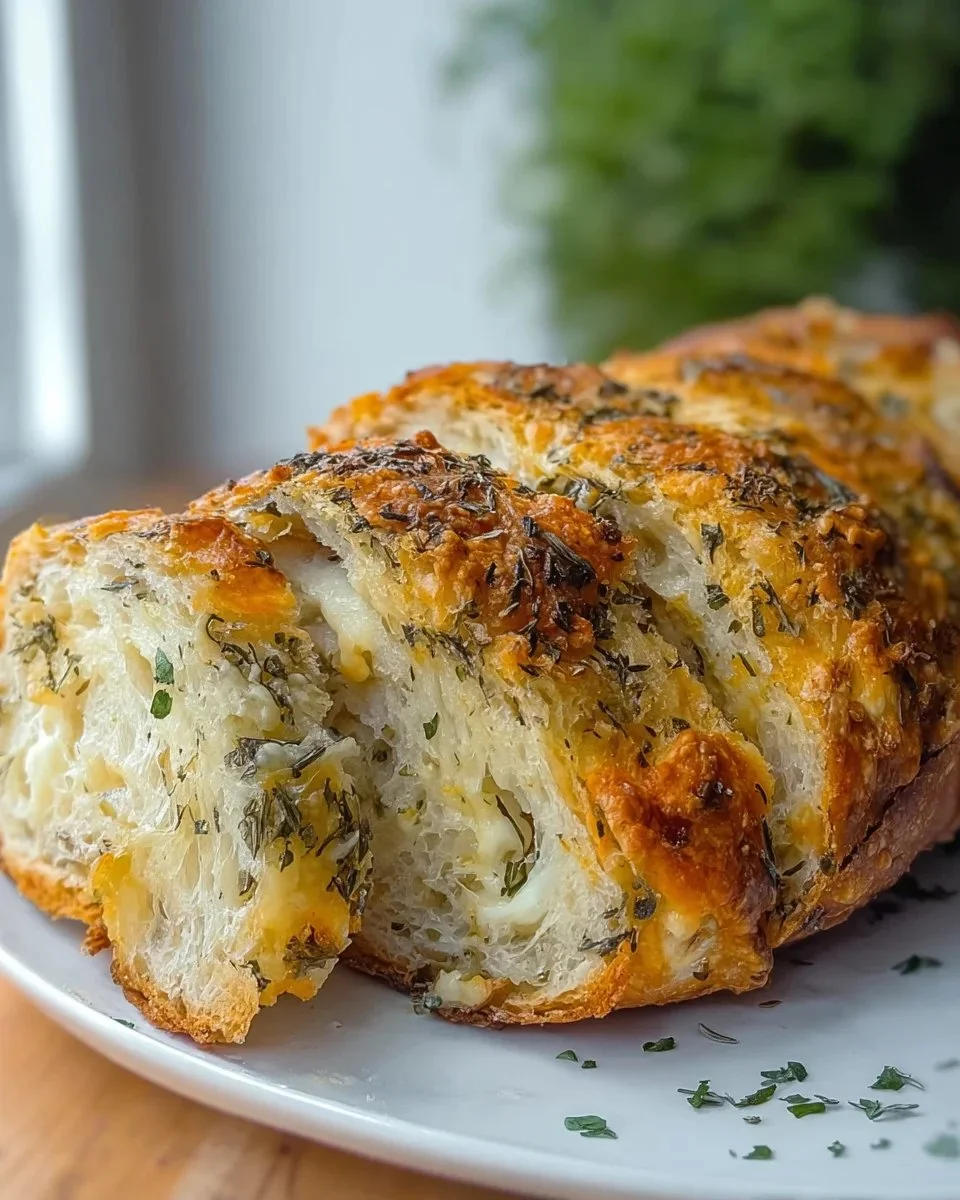
Italian Herbs And Cheese Bread Recipe
A loaf that fills the kitchen with a warm, savory perfume—garlicky butter, fragrant Italian herbs, and molten cheese weaving through soft, pillowy crumb. Picture tearing into a slice while steam rises, the crust crackling under your fingers and the first bite delivering a buttery, chewy mouthfeel with a sprinkle of parmesan-granulated salt on top. This bread is comfort and celebration in one: nostalgic, homey, and impossible to resist.
Make it for cozy weekend breakfasts, as a show-stopping side at family dinners, for potlucks, or to elevate a simple sandwich. It’s also perfect when you want something made-ahead that reheats beautifully. If you enjoy riffs on classic loaves, you may like this further take on a similar loaf available here: Italian herb and cheese bread variations.
At a Glance
- Prep time: 20 minutes active (plus rising time)
- Cook time: 30–35 minutes
- Total time: About 2 hours (including two rises)
- Servings: 8 (one standard 9×5-inch loaf, sliced)
- Difficulty level: Medium — beginner-friendly if you follow the steps
Nutrition Highlights
Nutrition per serving (1 slice — recipe yields 8 slices). These are estimates calculated from ingredient-standard values (USDA FoodData Central nutritional profiles) and rounded for clarity. Actual values will vary slightly by brand and precise measurements.
- Calories: ~360 kcal
- Protein: ~10.5 g
- Carbohydrates: ~43 g
- Dietary fiber: ~1.6 g
- Sugars: ~1.5–2 g
- Fat: ~16.5 g
- Saturated fat: ~7–8 g
- Sodium: ~600 mg
Notes on accuracy and health context:
- These figures are approximate and intended as a guideline. They were estimated using standard food composition data (USDA FoodData Central) and reflect typical values for all-purpose flour, olive oil, butter, mozzarella, and parmesan.
- For sodium context, the Mayo Clinic and other health organizations recommend keeping daily sodium below ~2,300 mg for most adults; one slice contributes a moderate portion of that daily limit depending on other foods you eat.
- If you need precise nutrition tracking (for medical needs or tight dietary goals), weigh your own ingredients and use an approved nutrition calculator or consult a registered dietitian.
Why You’ll Love It
- Aroma & Taste: The aroma is irresistible—garlic and butter with bright Italian herbs—so it’s a loaf that announces itself even before it’s sliced. The combination of melted mozzarella and nutty parmesan gives a layered cheesiness: gooey interior with savory, slightly crisped parmesan on the crust.
- Comfort & Gathering: This bread is inherently social. It’s ideal for sharing—tear-and-eat moments at casual dinners, picnics, or game nights. It brings a cozy, homemade feel to any table.
- Ease & Versatility: The technique is straightforward—no complicated laminations or exotic equipment—so it’s accessible to home bakers who want a reliably delicious result.
- Seasonal & Festive: Serve it warm at holiday meals, alongside soups in colder months, or as a light snack at spring brunches—the flavors suit all seasons.
How to Make Italian Herbs And Cheese Bread Recipe
Ingredients
- 3½ cups (≈420 g) all-purpose flour
- 2¼ teaspoons active dry yeast (1 packet)
- 1 tablespoon sugar
- 1½ teaspoons salt
- 1 cup warm water (110°F / 43°C)
- 3 tablespoons olive oil
- 4 tablespoons butter (softened)
- 3 cloves garlic (minced)
- 1½ tablespoons dried Italian herb blend (oregano, basil, thyme, rosemary)
- 1 cup shredded mozzarella cheese (≈113 g)
- ½ cup grated parmesan cheese (≈50 g)
- 2 tablespoons fresh parsley (chopped)
Optional ingredients and substitutions
- Use 1 cup part-skim mozzarella for lower fat, or a smoked mozzarella for a deeper flavor.
- Substitute 2 tablespoons olive oil + 2 tablespoons greek yogurt for some or all butter to slightly reduce saturated fat and add tenderness.
- For a dairy-free/vegan version, use vegan butter and plant-based shredded cheese (see variations below).
- For a nuttier flavor and more fiber, swap 1 cup of all-purpose flour for whole wheat flour (may require slightly more water).
Method & Process (step-by-step)
- In a large bowl, combine the warm water, sugar, and active dry yeast. Stir lightly and let sit for 5 minutes until foamy (proofing confirms yeast is active).
- Add the olive oil, 3 cups of the flour, and the salt to the yeast mixture. Mix until a shaggy dough forms.
- Turn the dough onto a lightly floured surface and knead for 6–8 minutes until smooth and elastic, adding the remaining flour as needed to prevent sticking but avoid adding too much (dough should be soft and slightly tacky).
- Place the dough in a lightly oiled bowl, cover with plastic or a clean kitchen towel, and let rise in a warm place for about 1 hour, or until doubled in size.
- Meanwhile, in a small bowl, mix the softened butter with the minced garlic and dried Italian herbs to make the herb butter.
- Once the dough has risen, roll it out on a lightly floured surface to a 12×18 inch rectangle.
- Spread the herb butter evenly over the rectangle, leaving a small margin at the edges. Sprinkle the shredded mozzarella, grated parmesan (reserve a tablespoon for topping if you like), and chopped parsley evenly over the buttered surface.
- Starting from the long side, roll the dough tightly into a log. Pinch and seal the seam and the ends to keep the filling from leaking.
- Place the roll seam-side down into a greased 9×5-inch loaf pan. Cover and let rise again for 30–45 minutes until puffy.
- Preheat the oven to 375°F (190°C). If you reserved parmesan for a topping, brush the loaf lightly with a little olive oil or melted butter and sprinkle the reserved parmesan on top.
- Bake for 30–35 minutes until golden brown and it sounds hollow when tapped, or an instant-read thermometer reads ~190–200°F (88–93°C) in the center.
- Remove from the oven and let rest in the pan for 10 minutes, then transfer to a rack to cool slightly. Serve warm for best texture.
Practical tips
- Avoid over-flouring while kneading; too much flour can make the loaf dense. The dough should be slightly tacky.
- If your kitchen is cool, place the dough in an oven with the light on (turned off) to create a warm rise environment.
- To check doneness, tap the bottom of the loaf; a hollow sound indicates it’s baked through. Use an instant-read thermometer for precision.
- Let the loaf cool a short while before slicing to prevent the cheese and crumb from becoming gummy.
Best Pairings
- Simple: Slather a warm slice with extra herb butter or plain butter.
- For meals: Serve alongside tomato soup, minestrone, or a Caesar salad to soak up sauces.
- Sandwiches: Slice thickly and use for grilled sandwiches—mozzarella and roasted peppers make a great filling.
- Brunch: Pair with scrambled eggs, roasted cherry tomatoes, and herbal tea or coffee.
- Appetizer: Slice thinly, toast lightly, and top with bruschetta mix or a smear of ricotta and honey for a sweet-savory bite.
Shelf Life & Storage
- Room temperature: Store tightly wrapped at room temperature for 2 days (keep in a bread box or sealed bag to retain crust softness).
- Refrigeration: Up to 4–5 days wrapped in foil or airtight container (note: refrigeration can dry bread; reheat gently).
- Freezer: Wrap tightly in plastic wrap then foil and freeze for up to 2–3 months. Thaw overnight in the refrigerator and reheat in a 350°F oven for 10–15 minutes to revive crust and melt cheese.
- Safety note: If you added perishable toppings (e.g., sliced fresh tomatoes) or left a moist filling exposed for long periods, store in the fridge and consume sooner.
Pro Tips & Tricks
- Cheese distribution: Grate your own mozzarella and parmesan from blocks for better melting and flavor—pre-shredded cheese often contains anti-caking agents that affect melt.
- Butter temperature: Use softened (not melted) butter for the herb mix so it spreads easily but doesn’t pool out of the dough during rolling.
- Even rise: For a taller, light loaf, shape the dough tightly when you roll it and press seams firmly to trap air.
- Crispier top: Brush the loaf with a light olive oil or an egg wash before baking for a shinier, crisper crust (egg wash = 1 beaten egg + 1 tbsp water).
- Doneness cue: If the top browns too quickly, tent with foil for the last 10–15 minutes.
Recipe Variations
- Vegan version: Use plant-based butter and a dairy-free shredded cheese (look for melty varieties); replace milk-based ingredients if used (this recipe uses water so it’s easy to veganize).
- Herb-forward: Add 1 tablespoon fresh chopped rosemary and 1 tablespoon fresh basil to the herb butter for a punchier, fresher aroma.
- Olive-and-sundried: Mix ½ cup chopped kalamata olives and ¼ cup chopped sundried tomatoes into the cheese layer for a Mediterranean twist.
- Garlic-lover’s: Increase garlic to 6 cloves and add 1 teaspoon garlic powder to the dough for a bold garlic bread loaf.
- Whole-grain swap: Replace 1 cup of all-purpose flour with whole wheat flour and add 1 tablespoon honey to balance dryness; dough may need slightly more water.
Frequently Asked Questions
Q: Can I make this bread ahead and freeze it?
A: Yes. Wrap the cooled loaf tightly in plastic and foil and freeze up to 2–3 months. Thaw overnight in the fridge and reheat in a 350°F oven for 10–15 minutes.
Q: My dough is sticky—what should I do?
A: Add flour a tablespoon at a time while kneading until dough becomes smooth and slightly tacky, but avoid adding too much. If dough gets too stiff, add a teaspoon of water at a time.
Q: Can I use instant yeast instead of active dry yeast?
A: Yes. Reduce proofing time; either mix instant yeast directly with dry ingredients or use 2¼ teaspoons instant yeast in place of active dry yeast. You may skip the initial 5-minute proof, but still allow dough to rise until doubled.
Q: How do I prevent cheese from leaking out during baking?
A: Seal seams and ends carefully after rolling. Using slightly drier shredded cheese (pat excess moisture with a paper towel) helps, and placing the seam side down in the pan reduces leaks.
Q: Is there a gluten-free option?
A: Use a high-quality gluten-free all-purpose flour blend formulated for yeast breads and add a binder such as xanthan gum if not present. Texture will differ; follow blend instructions for hydration adjustments.
Conclusion
I hope this Italian Herbs and Cheese Bread inspires you to turn simple pantry staples into a loaf that defines comfort and conviviality. If you’re curious about other copycat takes on this style of subway-style loaf, check out this faithful recreation of the sandwich-shop favorite at Subway Bread Recipe (Italian Herb and Cheese Copycat). For another perspective and tips on achieving the classic herb-and-cheese finish, this home baker’s write-up is a helpful companion: Italian Herb and Cheese Bread Subway Copycat Recipe.
If you make this loaf, please share a photo and let me know your favorite variation — I love hearing how readers put their own spin on a recipe. And if you enjoyed this post, subscribe for more approachable bread recipes and baking tips.
Printable Recipe Card
Want just the essential recipe details without scrolling through the article? Get our printable recipe card with just the ingredients and instructions.


