
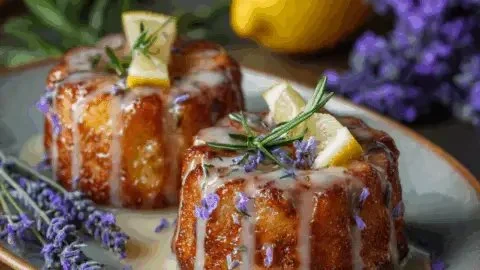
Mini Lemon Cakes With Lavender Glaze
There’s a bright, intoxicating moment when the oven door opens and the scent of lemon and butter drifts through the kitchen—sharp citrus, warm vanilla, and a hint of floral lavender that lifts the whole room. These mini lemon cakes are tender and crumbly with a delicate crumb that melts on the tongue; the lavender glaze adds an elegant, slightly perfumed finish that makes each bite feel like a small celebration.
This recipe is perfect for lazy weekend breakfasts with a pot of tea, elegant afternoon gatherings, bridal showers, or when you want a small, pretty dessert that feels special but doesn’t require hours of fuss. They’re also great to bake ahead for a picnic or to bring to a potluck—individual portions mean sharing is easy and presentation is effortless. If you love citrus-forward cakes, you may also enjoy a larger-format version like this lemon bundt cake with glaze, which uses similar flavors on a grander scale.
Dish Snapshot
- Prep time: 20 minutes
- Cook time: 15–18 minutes (for mini cakes)
- Total time: 35–40 minutes
- Servings: Makes about 12 mini cakes (depends on pan size)
- Difficulty: Easy–Intermediate (basic baking skills)
Nutrition Highlights
Estimated nutrition per mini cake (1 of 12). Values are approximate and were calculated from ingredient amounts using USDA FoodData Central as the primary reference; individual results will vary with exact brands and portion sizes.
- Calories: ~270 kcal
- Protein: ~3 g
- Carbohydrates: ~43 g
- Sugars: ~32 g
- Fiber: ~0.5 g
- Fat: ~8–9 g
- Saturated fat: ~5 g
- Sodium: ~120 mg
Notes on accuracy: these are estimates based on typical values for all-purpose flour, unsalted butter, granulated and powdered sugar, eggs, sour cream, and whole milk (USDA FoodData Central). For more precise tracking—especially if you have dietary concerns—enter your exact brands and measured weights into a nutrition calculator or consult a registered dietitian. Trusted health resources like the Mayo Clinic also recommend watching portion sizes and ingredient swaps (e.g., lowering sugar or butter) to better align recipes with specific nutritional goals.
Why You’ll Love It
- Flavor & aroma: Bright lemon zest and juice provide a clean citrus punch that’s balanced by the browned-butter richness of the cake; the lavender glaze adds a whisper of floral complexity so the flavor profile feels sophisticated without being cloying.
- Texture: A tender, fine crumb that’s moist from sour cream and butter—light enough to be delicate, sturdy enough to hold a glaze.
- Ease & versatility: Quick to mix, fast to bake, and perfect for making ahead. These mini cakes look elevated on a platter but are simple enough for weeknight baking.
- Social/seasonal appeal: Floral‑citrus combos are especially lovely in spring and summer, making these ideal for showers, garden parties, or Mother’s Day brunches.
Step-by-Step Instructions
Ingredients
For the lemon cakes:
- 1 1/3 cups (170 g) all-purpose flour
- 1/2 tsp kosher salt
- 1/8 tsp baking soda
- 1/2 cup (113 g) unsalted butter, softened
- 2/3 cup (134 g) granulated sugar
- 1/3 cup (67 g) packed light brown sugar
- 1 Tbsp grated lemon zest (from about 2 lemons)
- 2 large eggs, at room temperature
- 1/4 cup (60 g) sour cream, at room temperature
- 1/4 cup (60 ml) whole milk, at room temperature
- 1 tsp vanilla extract
For the lavender glaze:
- 1/4 cup (60 ml) whole milk (or as needed)
- 1/2 tsp culinary lavender, crushed lightly (or 1 tsp lavender simple syrup for stronger flavor)
- 1 1/2 cups (180 g) powdered sugar, sifted
- 1/4 tsp kosher salt
- 1/8 tsp vanilla extract
- Optional garnish: edible flowers and additional lemon zest
Optional ingredients/substitutions:
- Swap sour cream for plain Greek yogurt (same amount) for tang and protein.
- Use a dairy-free butter and plant-based milk to make the cakes dairy-free (glaze may need thinning with more plant milk).
- Reduce powdered sugar in glaze by 1/4 cup for a thinner glaze and fewer sugars.
- For a stronger lavender note, infuse the milk with lavender over low heat (do not boil) for 5–7 minutes, then strain.
Part 1: Make the Lemon Cakes
- Preheat oven to 350°F (175°C). Grease and flour a mini cake/muffin pan or line with paper liners.
- In a medium bowl, whisk together flour, salt, and baking soda; set aside.
- In a large bowl, cream the softened butter with both sugars and the lemon zest until pale and fluffy (about 2–3 minutes) using a mixer on medium speed. Scrape down the bowl.
- Add eggs one at a time, mixing until combined and scraping the bowl between additions. Stir in vanilla.
- With the mixer on low, add half the dry ingredients, then the sour cream and milk, then the remaining dry ingredients. Mix until just combined—do not overmix. Batter should be smooth and scoopable.
- Spoon batter into prepared mini pans, filling each about 2/3 full (you should get roughly 12). Smooth tops.
- Bake 15–18 minutes, rotating the pan halfway through, until tops are lightly golden and a toothpick inserted comes out with a few moist crumbs (not wet batter).
- Let cakes cool in the pan 10 minutes, then transfer to a wire rack to cool completely before glazing.
Practical baking tips:
- Avoid overmixing once you add the flour—overdeveloped gluten leads to tough cakes.
- Use room-temperature eggs and dairy so the batter blends smoothly and bakes evenly.
- Test doneness toward the low end of the bake time; mini cakes can overbake quickly.
Part 2: Make the Glaze and Serve
- If infusing milk: gently warm 1/4 cup milk with the crushed lavender over low heat for 5 minutes, then strain and cool slightly. (Skip infusion if using dried lavender directly or lavender syrup.)
- In a bowl, whisk together powdered sugar, salt, and vanilla. Add the lavender-infused milk (or plain milk and 1/2 tsp crushed lavender) a tablespoon at a time until you reach a thick but pourable glaze consistency. If using crushed lavender in the glaze, let the glaze sit 5–10 minutes to bloom for more flavor; strain if desired for a smooth finish.
- Place cooled cakes on a wire rack over a sheet pan and spoon or drizzle the glaze over each cake, letting it drip down the sides. Garnish with edible flowers and extra lemon zest while glaze is wet.
- Let glaze set 15–20 minutes before serving.
Serving Suggestions
- Serve warm (glaze set) with a steaming cup of Earl Grey or chamomile tea for a classic pairing.
- Offer plain or with a dollop of lightly whipped cream or mascarpone for extra richness.
- Assemble mini dessert plates with two cakes and fresh berries for an elegant dessert course.
- For a brunch spread, pair with smoked salmon, fresh fruit, and savory quiches to balance sweet and savory elements.
- If you like mini loaves or more rustic presentations, compare techniques and inspiration from this apple pecan cake with caramel glaze to adapt presentation and glaze techniques.
Keeping it Fresh
- Room temperature: Store in an airtight container at room temperature for 1–2 days (shorter if very warm/humid).
- Refrigeration: Keep in an airtight container for up to 4–5 days. Bring to room temperature before serving for best texture.
- Freezer: Unfrosted mini cakes freeze best—wrap individually in plastic wrap and store in a freezer-safe bag for up to 2–3 months. Thaw overnight in the refrigerator, then bring to room temp and glaze before serving (or thaw and glaze, but note that glaze may become slightly softer).
Chef’s Advice
- Zest lemons before juicing. Zest dries out quickly and clings to the fruit otherwise. Fresh zest is the key to a bright lemon flavor.
- For the best lavender flavor without bitterness, use culinary-grade lavender and crush it lightly. If using whole buds in the glaze, infuse them in warm milk then strain to avoid gritty texture.
- Measure flour by weight when possible (1 1/3 cups ≈ 170 g) to maintain consistent texture—scooping cups directly can compact flour and lead to dense results.
- If your batter seems very thick, add up to 1–2 tablespoons more milk; if very thin, add a tablespoon of flour.
- To prevent soggy bottoms, let cakes cool in the pan briefly before unmolding, and ensure your pan is well-greased and floured or lined with reliable liners.
Creative Twists
- Honey-Lavender Variation: Replace the granulated sugar with 1/3 cup honey + 1/3 cup sugar (reduce oven temperature by 10°F and watch doneness); use honey in the glaze (substitute 2 tbsp honey for 2–3 tbsp milk) for a floral-sweet profile.
- Blueberry-Lemon Mini Cakes: Fold 3/4 cup fresh or frozen blueberries into the batter (toss frozen berries with 1 tsp flour to prevent color bleed). Use the same lavender glaze or a simple lemon glaze.
- Gluten-Free Option: Substitute a 1:1 gluten-free flour blend (weigh per package guidance) and add 1/4 tsp xanthan gum if your blend lacks binding agents. Bake and test doneness; textures will be slightly different but still delicious.
- Lavender Syrup Glaze: Make a lavender simple syrup and whisk it into the powdered sugar instead of milk for a glossy, subtly floral finish.
All Your Questions Answered
Q: Can I use dried lavender?
A: Yes—use culinary-grade dried lavender in small amounts (about 1/2 tsp crushed) or infuse the milk and then strain. Avoid non-culinary lavender and use sparingly to prevent bitterness.
Q: My cakes came out dense—what went wrong?
A: Likely overmixing or too much flour (scooped cups). Try folding gently and measure flour by weight. Also ensure your leavening (baking soda) is fresh.
Q: Can I make these ahead and freeze?
A: Yes—freeze unfrosted cakes individually wrapped for 2–3 months. Thaw in the fridge or at room temp and glaze before serving for best texture.
Q: How do I reduce sugar without ruining the texture?
A: Reduce granulated and powdered sugar by up to 20% and consider adding a tablespoon more sour cream for moisture. Texture will be slightly different but still pleasant.
Q: Are these suitable for kids?
A: Yes—floral notes are subtle; you can reduce lavender to 1/4 tsp if concerned, and the lemon keeps them bright and appealing for younger palates.
Conclusion
These mini lemon cakes with lavender glaze are a lovely balance of bright citrus and floral elegance—small, dainty cakes that make any occasion feel thoughtful. I hope you bake a batch soon and share how they turned out. For inspiration on similar citrus-lavender combinations and alternative approaches, see this citrus‑forward Citrus Cake with a Lemon-Lavender Glaze – She’s Got The Cooks and this take on small loaves in the Lavender Lemon Mini Loaves – Sweet Beginnings Blog. If you make them, leave a comment or a photo—I’d love to hear what twist you tried and which tea you paired them with.
Printable Recipe Card
Want just the essential recipe details without scrolling through the article? Get our printable recipe card with just the ingredients and instructions.


