Philly Cheesesteak Skillet
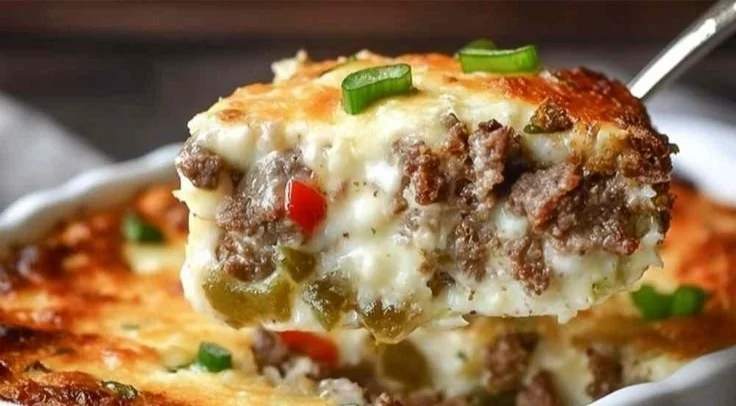
There’s something instantly comforting about the sizzle of thinly sliced steak hitting a hot skillet—the air fills with savory, beefy aroma, sweet caramelized onions, and the faint, smoky tang of melted provolone. Each forkful gives you tender ribbons of meat, soft peppers, and mushrooms wrapped in gooey cheese; the contrast of textures and bold, salty-sweet flavors makes this skillet feel like a warm hug at the end of a long day. Whether you’re chasing nostalgia for a street-cart sandwich, feeding a hungry family on a weeknight, or building a crowd-pleasing spread for a game day, this Philly Cheesesteak Skillet delivers big flavor with minimal fuss.
If you like skillet-style riffs, you might also enjoy this hearty Philly cheesesteak rice skillet, which makes the meal even more filling while keeping the same savory profile.
At a Glance
- Prep Time: 10 minutes
- Cook Time: 12–15 minutes
- Total Time: 25 minutes
- Servings: 4 generous portions
- Difficulty Level: Easy — great for beginner cooks and weeknight dinners
Nutrition Highlights
Nutritional values are estimates per serving (recipe yields 4 servings). Estimates are based on USDA FoodData Central values for the listed ingredients and rounded for clarity. Individual results will vary by exact cut of meat, cheese brand, and added salt. For general dietary guidance, refer to government health recommendations (for example, the USDA and Mayo Clinic).
Approximate nutrition per serving:
- Calories: 405 kcal
- Protein: 39 g
- Carbohydrates: 6 g
- Dietary Fiber: 1.5 g
- Total Fat: 25 g
- Saturated Fat: ~10 g
- Sodium: ~300 mg (without added table salt; will increase if you salt during cooking)
Notes on these numbers:
- Protein is high because of the beef and cheese—making this a satiating, muscle-friendly meal.
- Carbohydrates are low in this skillet as written; add a roll or serve over rice/pasta if you need more carbs.
- Sodium depends heavily on the cheese and any added salt—choose low-sodium cheese or reduce added salt to lower sodium intake. Values are derived from USDA FoodData Central ingredient entries and rounded to the nearest sensible unit.
Why You’ll Love It
This skillet hits several sweet spots at once:
- Irresistible aroma and flavor: quick searing brings deep, beefy notes while the veggies melt into a savory-sweet base for the cheese.
- Crowd-pleaser: it’s familiar, indulgent, and easy to scale—perfect for game day, potlucks, or casual gatherings.
- Speed and simplicity: from chopping board to table in under 30 minutes, making it ideal for busy weeknights.
- Comfort-food satisfaction without fuss: all the satisfying components of a Philly sandwich concentrated in one pan, with options to lighten or enrich as you like.
How to Make Philly Cheesesteak Skillet
Ingredients:
- 1 lb steak (sirloin or ribeye), thinly sliced
- 1 tablespoon olive oil
- 1 green bell pepper, thinly sliced
- 1 onion, thinly sliced (yellow or sweet)
- 8 oz mushrooms, sliced
- 4 oz provolone cheese, shredded (or sliced, if preferred)
- Salt and pepper to taste
- Optional: 1/2 teaspoon garlic powder, pinch of crushed red pepper flakes
- Substitutions/optional adds: hoagie rolls for serving, Swiss or mozzarella instead of provolone, thinly sliced chicken or turkey for a lighter protein
Instructions:
- Pat the steak dry with paper towels and season lightly with salt and pepper (remember cheese adds salt later).
- Heat the olive oil in a large skillet over medium-high heat until shimmering.
- Add the sliced steak in an even layer and cook without moving for 1–2 minutes to get a good sear; stir and continue cooking until just browned, about 2–3 more minutes total. Remove the steak to a bowl and set aside (it will finish cooking with the vegetables).
- In the same skillet, add the sliced onions, bell peppers, and mushrooms. Sauté, stirring occasionally, until softened and starting to caramelize, about 5–7 minutes. If the pan is dry, add a splash more oil.
- Return the steak to the skillet and toss with the vegetables to combine. Season with additional salt and pepper, plus garlic powder or crushed red pepper if using. Check for doneness—steak should be browned and cooked through but still tender.
- Reduce heat to low. Sprinkle the shredded provolone evenly over the steak and veggies. Cover the skillet with a lid and let the cheese melt for 2–3 minutes, or until gooey and bubbly.
- Serve hot, straight from the skillet or spooned into rolls or over rice/pasta.
Practical tips:
- Slice the steak very thin (partially freezing the meat for 20 minutes makes this easier). Thin slices cook fast and stay tender.
- Avoid overcrowding the pan when searing the steak—work in batches if necessary to ensure caramelization rather than steaming.
- If you prefer more sauce, stir in a splash of beef broth or a tablespoon of butter when you return the steak to the pan.
- For a crispier texture, finish under a broiler for 1–2 minutes (use an oven-safe skillet).
If you’d like a slightly different pan-based approach, check this classic Philly cheesesteak skillet for inspiration and serving ideas.
Best Pairings
- Classic: Toasted hoagie rolls or crusty Italian bread to create a sandwich experience.
- Lighter side: A simple green salad dressed with lemon vinaigrette to cut the richness.
- Hearty: Serve over steamed rice or buttered egg noodles for a filling dinner.
- Drinks: Cold beer (lager or pale ale), an iced tea, or a rich coffee for a brunch-style twist.
- Condiments: Hot sauce, pickled peppers, or a smear of garlic aioli for tang and heat.
Storage Instructions
- Room temperature: Best enjoyed immediately; do not leave cooked perishable foods at room temperature for more than 2 hours (1 hour if above 90°F / 32°C).
- Refrigeration: Store leftovers in an airtight container for 3–4 days. Reheat gently in a skillet over low-medium heat, covered, to keep the meat tender and allow the cheese to soften.
- Freezer: You can freeze the cooked mixture in a freezer-safe container for up to 2 months. Thaw overnight in the refrigerator before reheating. Note: texture of the vegetables may soften after freezing.
Chef’s Advice
- Best cuts: Sirloin strikes a balance between flavor and leanness; ribeye gives extra richness thanks to marbling. If using a leaner cut, don’t overcook—remove from heat while still slightly pink for the most tender result.
- Cheese choice: Provolone melts beautifully and gives the classic Philly flavor; Swiss or mozzarella are excellent if you want a milder profile. For a sharper bite, try a mix with provolone and a little sharp cheddar.
- Texture cues: The onions should be translucent and starting to brown; mushrooms should give off moisture and then reabsorb it as they caramelize. Those visual cues mean the veggies are properly cooked.
- Control salt: Add salt sparingly at first—cheese and any condiments you serve will add extra sodium. Taste before adding more.
Creative Twists
- Veg-forward / lighter: Swap steak for thinly sliced portobello mushrooms and use a plant-based provolone to make this vegetarian. Add a splash of balsamic at the end for depth.
- Spicy Philly: Stir in a diced jalapeño with the peppers and finish with sliced pepper jack cheese or a drizzle of Sriracha for heat.
- Mediterranean riff: Add sliced roasted red peppers, swap provolone for feta crumbles at the end, and finish with chopped fresh oregano and lemon zest.
- Gluten-free/Low-carb: Serve over cauliflower rice or crisp romaine leaves instead of a roll.
- Cheesy bake: Transfer the assembled skillet to an oven-safe dish, top with extra cheese and breadcrumbs, and bake at 400°F (200°C) for 8–10 minutes for a gratin finish.
Frequently Asked Questions
Q: Can I use frozen steak or precooked steak?
A: Fresh, thinly sliced raw steak gives the best texture. If using frozen steak, thaw and pat dry before slicing and searing. Precooked steak will warm through quickly but won’t develop the same caramelized flavor.
Q: How do I prevent the steak from getting tough?
A: Slice very thin across the grain and cook quickly over high heat. Avoid overcooking—remove the steak once browned and finish in the skillet with the veggies to keep it tender.
Q: Can I make this ahead for a party?
A: Yes—cook the components, cool quickly, and refrigerate separately. Reheat gently before serving and melt the cheese just before guests arrive for best texture.
Q: What’s a lighter cheese option?
A: Use a reduced-fat provolone or switch to part-skim mozzarella to cut calories and saturated fat, while still maintaining good meltability.
Q: How to reheat without drying out the meat?
A: Reheat gently in a skillet over low heat with a splash of beef broth or a pat of butter and cover to trap steam—this restores moisture without overcooking the steak.
Conclusion
Give this Philly Cheesesteak Skillet a try the next time you want something fast, flavorful, and crowd-ready—then tell a friend or leave a comment below about how you customized it. For an extra zesty take, see the bright version at Zesty Philly Cheesesteak Skillet – Gimme Some Oven, and for another easy skillet approach full of helpful variations, check out Cheesesteak Skillet – Brocc Your Body.
Printable Recipe Card
Want just the essential recipe details without scrolling through the article? Get our printable recipe card with just the ingredients and instructions.