Introduction
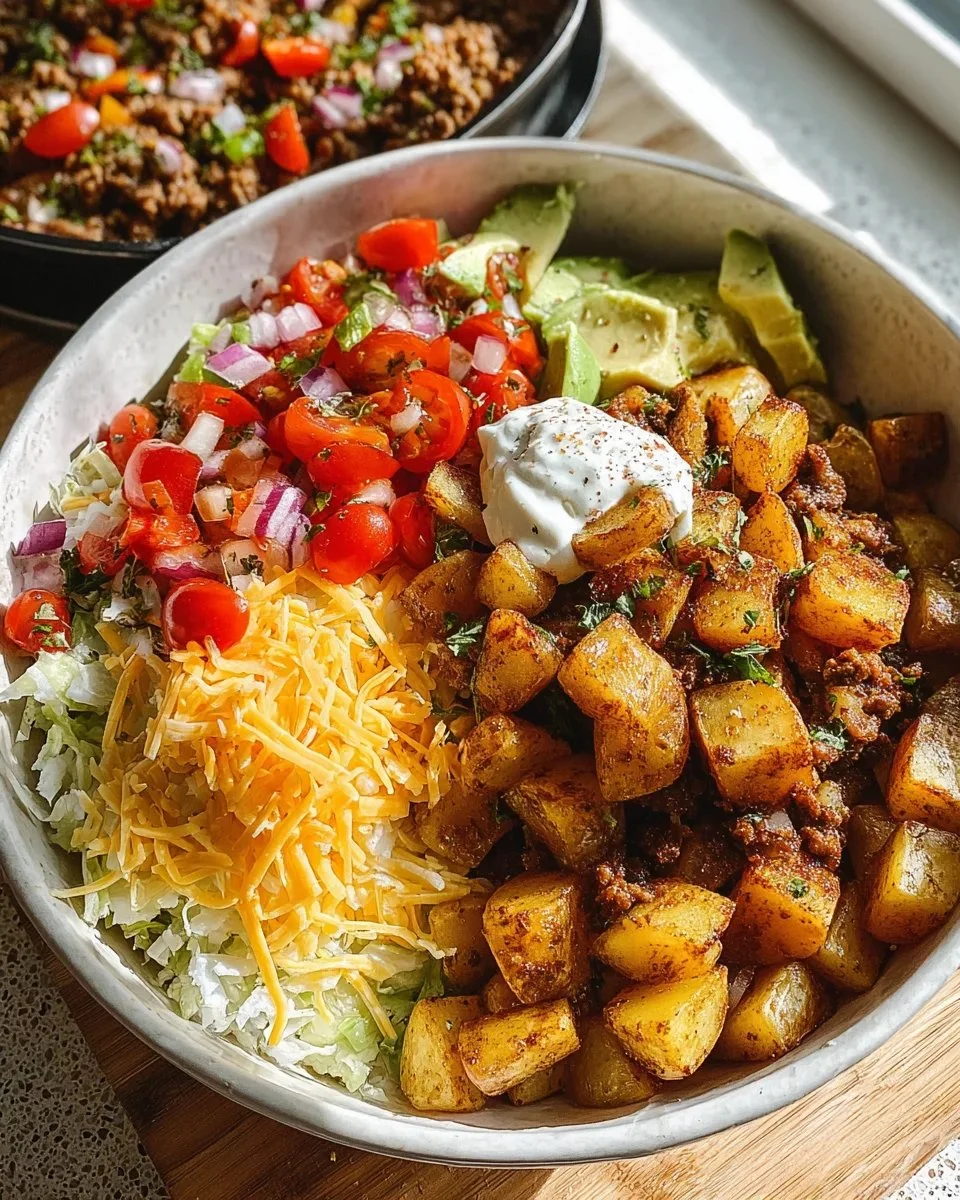
Imagine opening a meal-prep container and being greeted by warm, golden potato cubes perfumed with smoked paprika and cumin, the bright pop of roasted red and green peppers, and a cool dollop of tangy Greek yogurt that cuts through the richness. The aroma is smoky and citrus-laced; the first forkful is crisp-on-the-outside, tender-on-the-inside potatoes with a lively mix of textures from soft avocado and crunchy peppers. It’s comfort and fiesta in a single bowl.
This Quick Potato Taco Bowl Meal Prep is perfect for busy weekdays when you want dinner-ready lunches that feel homemade, for casual weekend gatherings where everyone can build their own bowls, or as a cozy post-hike meal. It’s hearty enough to satisfy, flexible enough to adapt to dietary needs, and bright enough to make you smile midweek. For a variation that emphasizes loaded baked-potato flavors, you can also compare techniques in this loaded potato taco bowls guide.
At a Glance
- Prep Time: 15 minutes
- Cook Time: 25–35 minutes (roasting potatoes) + 5–7 minutes (vegetable simmer)
- Total Time: 45–55 minutes (including cooling and assembly)
- Servings: 4 generous bowls
- Difficulty Level: Easy — beginner-friendly meal prep
Nutrition Highlights
Estimated nutrition per serving (recipe yields 4 servings). Values are approximate and calculated from ingredient totals using USDA FoodData Central and general guidance from Mayo Clinic for portion and macro estimation. Adjustments (cheese, extra oil, full-fat yogurt) will change totals.
- Calories: ~370 kcal per serving
- Protein: ~9–10 g
- Carbohydrates: ~50–55 g
- Fat: ~15 g
- Fiber: ~11–12 g
- Sodium: variable depending on added salt and salsa (estimate ~300–500 mg; reduce by using low-sodium broth and little added salt)
Notes on calculation: potatoes and avocados are the primary calorie/carbohydrate/fiber contributors; olive oil and avocado supply most of the healthy fats. If you add grated cheese or use full-fat yogurt, expect calories and fat to increase by 50–150 kcal per serving depending on amount used.
Why You’ll Love It
- Flavor & Aroma: Warm, smoky spices (chili powder, smoked paprika, cumin) paired with fresh lime and cilantro create an aromatic balance that feels satisfying without being heavy.
- Ease & Speed: Mostly hands-off roasting and a quick stovetop veggie sauté make this easy to batch-cook for the week.
- Meal-Prep Friendly: Components reheat well and toppings are stored separately to keep textures fresh.
- Crowd-Pleasing & Flexible: Great for family dinners, potlucks, or solo lunches—everyone can customize toppings.
- Healthful Comfort: Potatoes are a nutrient-dense, satiating carbohydrate with fiber and potassium; combined with avocado and Greek yogurt they make a balanced meal.
Preparation Guide
Ingredients
- 900 g Russet potatoes, peeled and diced (about 1.2 cm cubes)
- 1 large yellow onion, finely chopped
- 2 garlic cloves, minced
- 1 red bell pepper, finely diced
- 1 green bell pepper, finely diced
- 1 tbsp olive oil (divided: ½ tbsp for potatoes, ½ tbsp for vegetables)
- 1 tbsp chili powder (divided: ½ tbsp for potatoes, ½ tbsp for vegetables)
- 1 tsp ground cumin (divided: ½ tsp for potatoes, ½ tsp for vegetables)
- 1 tsp smoked paprika
- ½ tsp garlic powder
- ½ tsp onion powder
- ½ tsp dried oregano
- ¼ tsp cayenne pepper (optional, adjust to taste)
- Salt and black pepper, to taste
- 120 ml vegetable broth (or water)
- 100 g Greek yogurt or vegan sour cream alternative (store separately as topping)
- 2 avocados, diced or mashed into guacamole (store separately)
- 1 bunch fresh cilantro, chopped (separate)
- 1–2 limes, cut into wedges (separate)
- Salsa (store-bought or pico de gallo) (separate)
- Pickled jalapeños (optional, separate)
- Shredded cheese (Cheddar or Monterey Jack) or vegan cheese (optional, separate)
Optional ingredients & substitutions
- Swap russets for Yukon Gold for a slightly waxier texture.
- Use olive oil spray to reduce oil.
- For vegan: use vegan sour cream and vegan cheese.
- Add a can of drained black beans or corn (approx. 1 cup) for extra protein and fiber.
- For extra heat, add a tablespoon of adobo sauce or chipotle powder.
Step-by-step Instructions
- Preparation: Wash and dice potatoes to ~1.2 cm cubes. Finely chop the onion and dice the peppers. Mince the garlic. Preheat oven to 200°C (392°F) conventional (or 190°C fan).
- Season and roast the potatoes: In a large bowl, toss potato cubes with ½ tbsp olive oil, ½ tbsp chili powder, ½ tsp ground cumin, ¼ tsp garlic powder, salt, and black pepper until evenly coated. Spread in a single layer on a baking sheet lined with parchment paper. Roast 25–35 minutes, flipping once after 15–20 minutes, until golden and crisp at the edges and tender inside.
- Make the spiced vegetable mix: Heat ½ tbsp olive oil in a skillet over medium heat. Sauté the chopped onion about 3 minutes until translucent. Add minced garlic, diced red and green peppers and sauté another 3–4 minutes until softened. Add the remaining spices: ½ tbsp chili powder, ½ tsp cumin, 1 tsp smoked paprika, ¼ tsp garlic powder, ½ tsp onion powder, ½ tsp dried oregano and ¼ tsp cayenne (if using); toast briefly to activate aromas. Deglaze with 120 ml vegetable broth and simmer 5–7 minutes until the liquid reduces and the mixture becomes slightly saucy. Finish with a squeeze of lime, salt, and pepper to taste.
- Prepare toppings: Dice avocados or mash into guacamole; chop cilantro; cut limes into wedges; divide Greek yogurt, salsa, jalapeños, and cheese into small containers to keep fresh.
- Assembly & storage for meal prep: In meal-prep containers layer roasted potatoes first, then spoon on the spiced vegetable mixture. Allow components to cool slightly before sealing. Store toppings separately in airtight small containers. Seal main containers and refrigerate for up to 3–4 days.
- Reheating & serving: Reheat main containers in the microwave for 2–3 minutes or warm in a skillet to refresh crispiness. Add fresh toppings (avocado, yogurt, salsa, cilantro, lime) just before eating.
Practical tips
- Don’t overcrowd the baking sheet—potatoes need space to crisp. Use two sheets if necessary.
- Cut potatoes to uniform size for even roasting.
- If potatoes are underdone, finish in a skillet with a splash of oil for a few minutes.
- Store wet toppings like guacamole separately to prevent browning; add lime juice to guacamole to slow oxidation.
- For a shortcut, use pre-diced potatoes or frozen roasted potatoes—adjust roasting time.
For an alternative plating style or more assembly inspiration, check out this complementary guide to loaded potato taco bowls: Loaded Potato Taco Bowls: The Ultimate Meal Prep Dinner.
Best Pairings
- Protein boosts: Serve with black beans, grilled chicken, or a fried egg for a brunch-style bowl.
- Sides: Warm corn tortillas, cilantro-lime rice, or a crisp green salad.
- Drinks: A crunchy agua fresca (cucumber-lime) or a classic margarita pairs beautifully for evening gatherings; coffee or a citrusy tea for breakfast bowls.
- Snack-style: Scoop into tortilla chips with extra cheese and jalapeños for a nacho-inspired platter.
Keeping it Fresh
- Room temperature: Per USDA food safety guidelines, do not leave cooked perishable foods at room temperature for more than 2 hours (1 hour above 32°C/90°F).
- Refrigeration: Store assembled main components (potatoes + veggie mix) in airtight containers for 3–4 days. Keep avocado, yogurt, salsa, cilantro and lime wedges in separate small containers.
- Freezer: You can freeze roasted potatoes and the cooked vegetable mix for up to 1–2 months in freezer-safe containers; thaw overnight in the fridge and re-crisp in an oven or skillet. Note: fresh avocado and yogurt do not freeze well—store those fresh and add after reheating.
Chef’s Advice
- Potato choice: Russets roast up crisp and fluffy; Yukon Golds hold shape better and offer a creamier interior—use depending on whether you prefer fluff or creaminess.
- Maximize crispiness: After roasting, let potatoes rest briefly on the baking sheet to reabsorb steam, then transfer to a warm plate or skillet to keep crisp before packing.
- Spice layering: Season potatoes modestly for roasting and reserve bolder seasoning for the vegetable mix so flavors contrast rather than blend into an even single note.
- Reheating technique: For the best texture, reheat in a skillet with a light spray of oil over medium heat to restore crisp edges instead of microwaving only.
- Avocado freshness: To reduce browning, toss diced avocado with a squeeze of lime and store in an airtight container with a piece of plastic wrap pressed to the surface.
Creative Twists
- Vegan Power Bowl: Use vegan sour cream, omit cheese, add a can of cooked black beans (drained), and sprinkle with toasted pumpkin seeds for crunch.
- Smoky Chipotle: Stir 1–2 tbsp chipotle in adobo into the vegetable mix and add charred corn for smoky-sweet depth.
- Breakfast Version: Top each warmed bowl with a fried or poached egg and a drizzle of hot sauce—perfect for weekend brunch.
- Mediterranean Twist: Swap chili powder and cumin for za’atar and smoked paprika, finish with tzatziki (instead of yogurt) and add olives and cherry tomatoes.
- Tex-Mex Loaded Nacho Style: Layer potatoes with refried beans, cheddar, pickled jalapeños, and a dollop of pico for a shareable party platter.
Recipe Q&A
Q: Can I make this gluten-free?
A: Yes. The base recipe is naturally gluten-free—just double-check labels on spice blends, broth, and salsa.
Q: Can I substitute sweet potatoes?
A: Yes—sweet potatoes will roast more quickly and give a sweeter profile; reduce roasting time and watch closely to avoid over-softening.
Q: How do I keep potatoes from going soggy in the fridge?
A: Let roasted potatoes cool to near room temperature before sealing containers, and store toppings separately. Re-crisp in a skillet or oven when reheating.
Q: Is this suitable for meal prep for the whole week?
A: For best freshness, store for 3–4 days refrigerated. Freeze portions if you want longer storage (1–2 months), but keep avocado and yogurt fresh.
Q: Can I add protein to make it a one-bowl meal?
A: Absolutely—black beans, grilled chicken, shrimp, or tofu work well. Add proteins after reheating to preserve texture.
Conclusion
This Quick Potato Taco Bowl Meal Prep is a reliably delicious weeknight hero—simple to make, endlessly customizable, and built for busy lives that still want flavor. Try a batch this weekend, share your tweaks with fellow home cooks, and build a little community around flavors that bring comfort and joy.
For a German-language inspiration on the same concept, see Schnelle Kartoffel Taco Bowl Meal Prep – einfachkochenheute.de, and for more recipe ideas to pair or rotate through your meal plan, browse the Recipes Archives – The Foodie and The Fix.
Enjoy—then come back and tell me how you topped yours.
Printable Recipe Card
Want just the essential recipe details without scrolling through the article? Get our printable recipe card with just the ingredients and instructions.