Simple Color-Changing Magic Lemonade
There’s something a little bit theatrical about a drink that changes color at your fingertips. Picture this: a pitcher of deep sapphire-blue tea, the air bright with citrus as you slice a lemon, a cold glass full of ice clinking softly. When you squeeze in the lemon, the blue softens and blooms into a dazzling violet-pink — a small, joyful moment that delights every sense. The aroma is citrus-bright; the first sip is clean and refreshing, with the gentle floral hint of butterfly pea flower tea and the smooth sweetness of brown sugar balancing the lemon’s zing. The texture is light, thirst-quenching, and perfectly slotted between summer coolers and whimsical party drinks.
This recipe is perfect for backyard gatherings, children’s parties (non-alcoholic and magical), afternoon refreshment, or a festive beverage for when you want something beautiful and fast. It’s also a lovely way to introduce herbal tea flavors to kids and adults alike, and makes a show-stopping non-alcoholic option at celebrations.
At a Glance
- Prep Time: 10 minutes (plus time to chill if preferred)
- Cook Time: 5 minutes (steeping)
- Total Time: ~15 minutes (or 30 minutes if you chill the tea)
- Servings: 4 (about 4 cups)
- Difficulty Level: Easy — great for beginners
Nutrition Highlights
Estimated nutrition per serving (1 of 4 servings). Values are approximate and based on USDA FoodData Central values for brown sugar and lemon juice; use these as a guide for dietary planning.
- Calories: ~216 kcal
- Protein: ~0.2 g
- Total Carbohydrates: ~56 g
- Sugars: ~56 g
- Fat: ~0.1 g
- Fiber: ~0.2 g
- Sodium: < 10 mg
Notes: Most of the calories and carbohydrates come from the brown sugar (or other sweetener you choose). For a lower-calorie version, substitute brown sugar with an erythritol/stevia blend or reduce the sweetener to taste. For authoritative nutrient data references, values were verified against USDA FoodData Central and general guidance on dietary composition from reputable health sources.
Why You’ll Love It
This lemonade earns a special place in your recipe rotation for several reasons:
- Pure delight factor: The instant color change when acid meets the butterfly pea flower tea is playful and irresistible — a perfect conversation starter.
- Fast and easy: From steep to sip in about 15 minutes, or under half an hour if you chill it first.
- Versatile and inclusive: Naturally caffeine-free and alcohol-free, easily adapted for children, mocktails, or cocktails.
- A gentle floral note: The butterfly pea flower adds an elegant, slightly earthy floral undertone that makes the drink feel more grown-up than store-bought lemonade.
- Seasonal charm: Serve it icy cold on hot days, or as a signature sip for spring and summer gatherings to add visual drama to the table.
How to Make Simple Color-Changing Magic Lemonade
Ingredients
- Handful of butterfly blue pea flowers (about 1–2 teaspoons dried, or a small handful fresh)
- 1 cup brown sugar (or natural sweetener; see substitutions)
- 1 cup boiling water (for steeping)
- 2 cups room temperature filtered water
- Juice of 1–2 lemons (start with 1 and add to taste; about 2–4 tablespoons)
- Ice for serving
Optional ingredients and substitutions
- Honey, maple syrup, or a monk fruit/erythritol blend instead of brown sugar (reduce quantity to taste)
- 1/4–1/2 teaspoon culinary lavender extract or a small sprig of fresh mint for aroma
- Sparkling water to make a fizzy version (replace part or all of the 2 cups filtered water)
- Vodka or gin for an adult cocktail (add to individual glasses)
Step-by-step instructions
- Boil 1 cup of water in a small pot or kettle.
- Place the butterfly pea flowers in a heatproof cup or teapot and pour the boiling water over them. Steep for 3–5 minutes until the liquid has a deep blue color. Avoid steeping much longer; oversteeping can bring out a slightly vegetal bitterness.
- Strain the blue tea into a bowl or pitcher, discarding the spent flowers. Allow the blue tea to cool for a few minutes.
- Dissolve the brown sugar in 1/4 cup warm water (or stir directly into the warm blue tea) and mix thoroughly. Taste and adjust sweetness — you can always add more later.
- Stir the sweetened blue tea into the 2 cups of room temperature filtered water. Add the optional lavender extract or a mint sprig now if using; gently stir to combine.
- Fill serving glasses with ice.
- Pour the blue lemonade over the ice, leaving room at the top of each glass.
- Add lemon juice to each glass (or to the pitcher): watch the color shift from blue to purple to pink as the acid lowers the pH. Stir gently if needed.
- Taste and adjust: add more lemon for tang, more sweetener for balance, or top with sparkling water for fizz.
Practical tips
- Add lemon slowly to control the color transition — show it off by adding in a small stream.
- If the tea tastes too strong or bitter, dilute with more water rather than more sugar.
- For the brightest color change, use room temp water in the pitcher; very hot liquid can mute the visual effect.
Serving Suggestions
- Classic: Serve over plenty of ice in tall glasses, garnish with a lemon wheel and a small sprig of mint.
- Sparkling: Replace half or all of the 2 cups filtered water with sparkling water for a lively fizzy lemonade.
- Frozen slushie: Freeze the blue lemonade base in ice cube trays and blitz with a splash of lemon juice in a blender for a galaxy slush.
- Adult twist: Add 1–2 oz gin or vodka per glass and garnish with edible flowers for a cocktail version.
- Pairings: Pairs beautifully with light finger foods — cucumber sandwiches, goat cheese crostini, or lemony shortbread cookies — and balances richer fried snacks like tempura or fish tacos.
- Presentation tip: For parties, serve the blue base in a clear pitcher and bring out a small jug of lemon juice so guests can create their own color moment.
Storage Instructions
- Room temperature: Not recommended for long. If left at room temperature, consume within 6–8 hours (especially in warm climates).
- Refrigeration: Store in a sealed pitcher or airtight container for up to 3–4 days. Stir or shake before serving; if color has deepened, fresh lemon will refresh it.
- Freezer: Do not freeze lemonade in bottles (liquid expansion can break containers). For longer storage, freeze in ice cube trays for up to 2–3 months and use the cubes in future pitchers or slushies.
Insider Secrets
- Use fresh lemon juice for the cleanest, brightest color transformation and best flavor — bottled lemon juice often contains preservatives that can dull the effect.
- For the most dramatic color, add lemon directly to the individual glass so guests witness the change.
- If you prefer less sugar but still want the mouthfeel, try a 50/50 mix of brown sugar and a non-caloric sweetener; dissolve the brown sugar first for texture.
- If the blue tea is too weak, steep an extra minute but taste frequently; oversteeping can produce an astringent edge.
- Chill the blue tea before adding sparkling water to preserve bubbles.
Creative Twists
- Honey-Lavender Lemonade: Replace brown sugar with 3/4 cup honey, add 1/4 teaspoon lavender extract, and steep the tea on the cooler side for a softer floral profile.
- Citrus Berry Blend: Add a handful of muddled raspberries or muddled blueberries to each glass before adding lemon juice — the fruit adds color complexity and flavor depth.
- Ginger-Gold Variation: Add a 1-inch piece of fresh ginger sliced into the boiling water before steeping the butterfly pea flowers for a warming spicy note (strain out the ginger).
- Low-Calorie Version: Use a monk fruit/erythritol blend in a 1:1 sweetness ratio to reduce calories dramatically while keeping a similar mouthfeel.
- Boozy Blossom: For brunch or cocktails, float 1–2 oz elderflower liqueur or gin in each glass after the color changes.
Recipe Q&A
Q: Can I use fresh butterfly pea flowers or only dried?
A: Both work. Fresh flowers give a very vivid color with a lighter flavor; dried flowers are more concentrated — use about 1–2 teaspoons dried or a small handful fresh.
Q: My lemonade tastes flat after refrigerating. How do I refresh it?
A: Stir in a splash of fresh lemon juice and/or add a few ice cubes or a splash of chilled sparkling water to revive brightness.
Q: Can I make this sugar-free for kids?
A: Yes — use a monk fruit/erythritol blend or stevia to taste. Some natural sweeteners require different amounts, so add incrementally and taste.
Q: Will bottled lemon juice work for the color change?
A: Bottled lemon juice sometimes contains preservatives that can slightly reduce the intensity of the color change; fresh-squeezed lemon juice gives the best, brightest transformation.
Conclusion
If you’re looking for a simple, show-stopping drink that blends whimsy with refreshment, this Simple Color-Changing Magic Lemonade delivers on flavor, visual drama, and ease — give it a try and watch faces light up when the lemonade shifts hues. For a step-by-step video that demonstrates the color change and a slushie variation, check out this helpful video tutorial and recipe. For another written take on the recipe with tips and photos, this Alphafoodie recipe is a nice companion resource. Share your photos and any creative twists you try — I’d love to see your colorful creations!
Print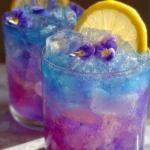
Simple Color-Changing Magic Lemonade
- Total Time: 15 minutes
- Yield: 4 servings 1x
- Diet: Vegan
Description
A refreshing lemonade that magically changes color when lemon juice is added, making it a perfect whimsical drink for any gathering.
Ingredients
- Handful of butterfly blue pea flowers (about 1–2 teaspoons dried or a small handful fresh)
- 1 cup brown sugar (or natural sweetener)
- 1 cup boiling water (for steeping)
- 2 cups room temperature filtered water
- Juice of 1–2 lemons (about 2–4 tablespoons)
- Ice for serving
Instructions
- Boil 1 cup of water in a small pot or kettle.
- Place the butterfly pea flowers in a heatproof cup or teapot and pour the boiling water over them. Steep for 3–5 minutes until the liquid has a deep blue color.
- Strain the blue tea into a bowl or pitcher, discarding the spent flowers. Allow to cool.
- Dissolve the brown sugar in 1/4 cup warm water or stir directly into the warm blue tea and mix thoroughly.
- Stir the sweetened blue tea into the 2 cups of room temperature filtered water.
- Fill serving glasses with ice.
- Pour the blue lemonade over the ice and add lemon juice to each glass, watching the color shift from blue to purple to pink.
- Taste and adjust with more lemon or sweetener as needed.
Notes
For a lower-calorie version, substitute brown sugar with an erythritol/stevia blend or reduce the sweetener to taste.
- Prep Time: 10 minutes
- Cook Time: 5 minutes
- Category: Beverage
- Method: Steeping
- Cuisine: American
Nutrition
- Serving Size: 1 serving
- Calories: 216
- Sugar: 56g
- Sodium: <10mg
- Fat: 0.1g
- Saturated Fat: 0g
- Unsaturated Fat: 0g
- Trans Fat: 0g
- Carbohydrates: 56g
- Fiber: 0.2g
- Protein: 0.2g
- Cholesterol: 0mg
Printable Recipe Card
Want just the essential recipe details without scrolling through the article? Get our printable recipe card with just the ingredients and instructions.