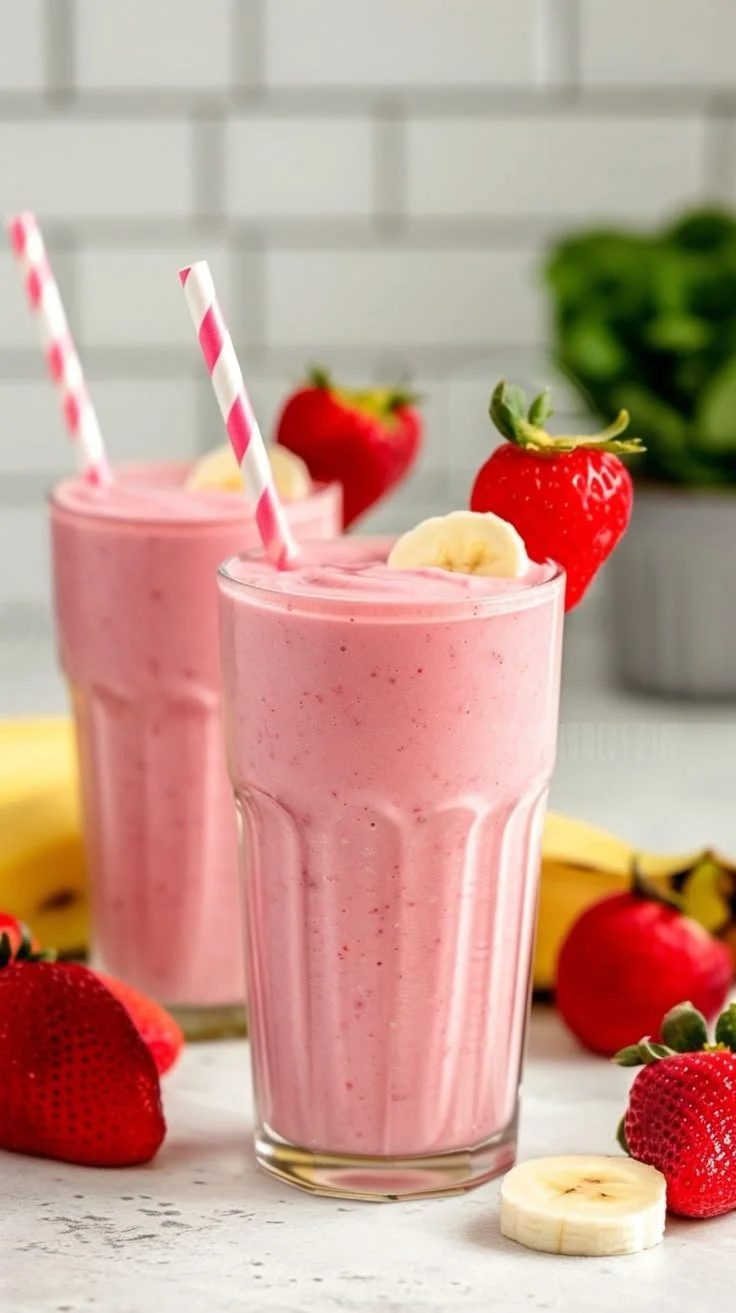
A Bright Start: Strawberry Banana Smoothie
There’s something instantly uplifting about the first sip of a strawberry banana smoothie: the sweet, sun-warmed aroma of strawberries, the creamy silkiness of ripe banana, and a cool, velvety mouthfeel that wakes up your taste buds without weighing you down. This blend is a little nostalgic—like summers at grandma’s house or school-day lunchboxes—yet modern and wholesome enough for a busy weekday breakfast or a post-workout recharge.
Whether you’re chasing a cozy morning routine, need a quick and nutritious snack between meetings, or want a crowd-pleasing beverage for brunch, this smoothie fits the bill. It’s fast, forgiving, and endlessly tweakable: make it lush and dessert-like for a weekend treat, or strip it down for a light, nutrient-dense refuel. Read on for everything you need to make the perfect strawberry banana smoothie at home.
At a Glance
- Prep Time: 5 minutes
- Cook Time: 0 minutes
- Total Time: 5 minutes
- Servings: 2 (about 12–16 oz total; pour into two glasses)
- Difficulty Level: Easy
Nutrition Information
The nutritional breakdown below is an approximate per-serving estimate for the recipe as written (serves 2). Values are based on standard ingredient profiles from USDA FoodData Central and align with general guidance from reputable health sources such as the Mayo Clinic.
Estimated nutrition per serving:
- Calories: ~205 kcal
- Protein: ~7–8 g
- Carbohydrates: ~34–36 g
- Dietary fiber: ~4–5 g
- Sugars: ~20–25 g (naturally occurring from fruit and dairy)
- Fat: ~4–5 g
- Sodium: ~60–90 mg
- Calcium: contributes meaningfully depending on milk/yogurt choice (dairy or fortified plant milk)
Notes:
- These values are approximations and will vary by brand and specific ingredient choices (e.g., whole milk vs. skim, Greek yogurt vs. plain yogurt, fresh vs. frozen fruit). For precise tracking, use your ingredient labels or a trusted database like the USDA FoodData Central and adjust based on the dairy or plant-based alternatives you select.
- If you need lower sugar, consider reducing the banana or swapping for half a banana and adding avocado for creaminess and healthy fats.
Why You’ll Love It
- Speed and simplicity: Ready in under five minutes with minimal cleanup—perfect for rushed mornings or when you want something nutritious quickly.
- Comfort and nostalgia: The familiar pairing of strawberry and banana evokes warm memories while still feeling fresh.
- Balanced energy: Fruit provides quick-release carbohydrates and natural sweetness; milk and yogurt add protein and calcium to make the smoothie more satisfying.
- Versatility: Easily adapted for dairy-free, higher-protein, or lower-sugar needs without sacrificing taste.
How to Make Strawberry Banana Smoothie
Ingredients
- 2 cups frozen strawberries
- 1 banana (fresh or frozen)
- 1 cup milk (dairy or plant-based, see substitutions below)
- 1/2 cup plain yogurt (regular or Greek; or non-dairy yogurt)
- 1/2 teaspoon vanilla extract
Optional ingredients and substitutions:
- For a vegan version: use unsweetened almond, oat, or soy milk + non-dairy plain yogurt.
- For extra protein: add 1 scoop protein powder or 1 tablespoon peanut butter/almond butter.
- For extra creaminess: add 1/4 avocado or 1–2 tablespoons chia seeds (let sit 5 minutes first).
- To sweeten: 1–2 teaspoons honey, maple syrup, or a pitted Medjool date (optional).
Step-by-step instructions
- Roughly chop the strawberries and banana for easier blending if your blender has a small jar.
- Add the milk and yogurt to the blender first (this helps the blades move freely).
- Add the strawberries, banana, and vanilla extract on top of the liquids.
- Blend on high until smooth and creamy, pausing to scrape down the sides if needed.
- If the smoothie is too thick, add more liquid (milk or water) 1–2 tablespoons at a time until desired consistency is reached.
- Pour into two glasses and serve immediately. Enjoy!
Practical tips
- Start with the liquid first to prevent motor strain and help ingredients circulate.
- If using fresh fruit and you want a thicker texture, add a handful of ice or use a frozen banana.
- Avoid over-blending—stop once the mixture is homogeneous to preserve texture and prevent warming.
- Taste and adjust sweetness at the end rather than adding sugar at the start.
Serving Suggestions
- Plain and simple: Pour into a tall glass, garnish with a whole strawberry or a banana slice.
- Breakfast bowl: Pour thicker smoothie into a bowl and top with granola, sliced almonds, chia seeds, and extra fruit.
- With coffee or tea: Serve alongside a light coffee or green tea for a balanced morning pairing.
- Kid-friendly snack: Serve in fun cups with colorful straws; add a small swirl of peanut butter for extra protein.
- Brunch spread: Offer this alongside yogurt parfaits, whole-grain toast, and scrambled eggs for a bright, balanced buffet.
Storage Instructions
- Room temperature: Not recommended—smoothies with dairy or fresh fruit should not be left out more than 2 hours for food-safety reasons.
- Refrigeration: Store in an airtight container in the fridge for up to 24–48 hours. Expect some separation; shake or stir before serving. Flavor and texture are best within the first 24 hours.
- Freezer: Pour into freezer-safe containers or ice cube trays and freeze for up to 2–3 months. Thaw overnight in the fridge or blend frozen cubes with a splash of milk to refresh the texture.
Pro Tips & Tricks
- Best fruit choices: Use ripe bananas for natural sweetness; firm bananas that are just ripe blend to creamy texture without turning mealy. Choose good-quality frozen strawberries (no added sugar) for consistent color and thickness.
- Texture cues: If the smoothie is frothy but thin, add a few ice cubes or 1/4 banana; if too thick, thin with milk by tablespoons.
- Nut butters and seeds: Add a tablespoon of almond or peanut butter for richness and satiety; a tablespoon of chia or ground flax adds fiber and a subtle nutty note.
- Blend in pulses: If your blender struggles with frozen fruit, pulse several times to break up chunks, then blend continuously.
- Flavor lift: A tiny pinch of salt or a squeeze of lemon can brighten the sweetness and balance the flavors.
Creative Twists
- Vegan Protein Boost: Use unsweetened soy milk + 1/2 cup silken tofu or a scoop of plant protein powder for ~15–20 g extra protein.
- Green Strawberry Banana Smoothie: Add a handful (1–2 cups) of spinach or baby kale—mild flavor, big nutrition—without altering the fruity taste much.
- Tropical Strawberry-Banana: Replace 1/2 cup strawberries with 1/2 cup frozen mango or pineapple for a sunny twist.
- Dessert-Style: Use full-fat yogurt and a touch of honey, then top with crushed graham cracker crumbs for a shortcake vibe.
- Low-Sugar Option: Use half a banana + 1/4 avocado and an unsweetened plant milk; boost sweetness with a touch of cinnamon or a low-calorie sweetener if desired.
Frequently Asked Questions
Q: Can I use fresh strawberries instead of frozen?
A: Yes—use fresh strawberries and add a handful of ice to achieve a chilled, slightly thick texture. If you prefer a smoother, colder result, freeze sliced strawberries ahead of time.
Q: How can I make this smoothie vegan?
A: Swap dairy milk for almond, oat, soy, or other plant milk and use a non-dairy plain yogurt (coconut or soy). For protein, add plant-based protein powder or silken tofu.
Q: My smoothie is too runny—what should I do?
A: Add a frozen banana, a handful of ice, or 1/4 to 1/2 cup frozen fruit to thicken. Alternatively, add 1–2 tablespoons of chia seeds and let it sit for 5–10 minutes to thicken.
Q: How far ahead can I make this smoothie?
A: Best enjoyed immediately. For storage, refrigerate in an airtight container and consume within 24–48 hours. You can also freeze portions for longer storage (up to 2–3 months).
Q: Is this a good post-workout option?
A: Yes—combining fruit with milk and yogurt provides carbohydrates to replenish glycogen and some protein to support recovery. If you need more protein, add a scoop of protein powder or nut butter.
Conclusion
I hope this strawberry banana smoothie inspires a fresh, simple ritual in your kitchen—one that’s quick enough for weekdays and delightful enough for slow weekend mornings. If you’d like to compare variations and ideas from other home cooks, check out this well-loved Strawberry Banana Smoothie Recipe – Love and Lemons and the practical, healthy approach at Strawberry Banana Smoothie (Easy & Healthy!) | Downshiftology. Share your photos or tweaks—I’d love to see how you make this recipe your own.
Print
Strawberry Banana Smoothie
- Total Time: 5 minutes
- Yield: 2 servings 1x
- Diet: Vegetarian
Description
A quick and nutritious strawberry banana smoothie, perfect for breakfast or a post-workout recharge.
Ingredients
- 2 cups frozen strawberries
- 1 banana (fresh or frozen)
- 1 cup milk (dairy or plant-based)
- 1/2 cup plain yogurt (regular or Greek; or non-dairy yogurt)
- 1/2 teaspoon vanilla extract
Instructions
- Roughly chop the strawberries and banana for easier blending if your blender has a small jar.
- Add the milk and yogurt to the blender first.
- Add the strawberries, banana, and vanilla extract on top of the liquids.
- Blend on high until smooth and creamy, pausing to scrape down the sides if needed.
- If the smoothie is too thick, add more liquid (milk or water) 1–2 tablespoons at a time until desired consistency is reached.
- Pour into two glasses and serve immediately. Enjoy!
Notes
For lower sugar, consider reducing the banana or adding avocado for creaminess.
- Prep Time: 5 minutes
- Cook Time: 0 minutes
- Category: Smoothie
- Method: Blending
- Cuisine: American
Nutrition
- Serving Size: 1 serving
- Calories: 205
- Sugar: 20g
- Sodium: 75mg
- Fat: 5g
- Saturated Fat: 2g
- Unsaturated Fat: 3g
- Trans Fat: 0g
- Carbohydrates: 36g
- Fiber: 4g
- Protein: 8g
- Cholesterol: 5mg
Printable Recipe Card
Want just the essential recipe details without scrolling through the article? Get our printable recipe card with just the ingredients and instructions.